
Dietl in the fjords — Narvik defence
, 50, a Bavarian Generalleutnant, has commanded the (mountain troops) since 1938. An early Nazi militant, he is one of Hitler's trusted generals. On the morning of 9 April 1940, he lands at Narvik with 2,000 mountain troops carried by Bonte's destroyers.
But the loss of the 10 German destroyers in the battles of Narvik (10-13 April) isolates Dietl: no maritime resupply is possible. He is reinforced by 2,200 surviving sailors from the sunken destroyers — re-equipped as improvised infantry, rifles, machine guns, no suitable uniforms. Dietl's total: 4,200 men. Opposite: 24,000 Allies. Allied composition: (French chasseurs alpins), , , under General .
From 14 April to 28 May 1940, Dietl mounts an alpine defence across the mountain chain between Bjerkvik and Beisfjord. Tactics: high ground, deep snow (3 m), ambushes on the passes. Resupply by Junkers Ju 52 parachute drops from Stavanger, 2,000 km away — at the limit of the aircraft's range.
Dietl can envisage 3 exits: retreat into Sweden, capitulation, or maximum resistance.
How should Dietl handle an increasingly precarious defence?
Dietl opts for maximum resistance, to buy time for the operations in the West. For 60 days, his division survives a siege theoretically impossible. Losses: about 500 German dead. On 28 May 1940, Narvik is taken by the Allies (Béthouart and Bohusz-Szyszko). Dietl withdraws towards Sweden, already encircled. But Fall Gelb transforms the strategic situation: the French collapse forces the Allies to evacuate Norway. From 4 to 8 June 1940, Allied withdrawal, and Narvik is handed back to Dietl without a fight. Hitler decorates him with the first Knight's Cross of the Iron Cross with Oak Leaves of the war and promotes him General der Gebirgstruppe. Dietl commands in Finland in 1941-1944 (failure at Murmansk). He dies on 23 June 1944 in an air crash in Austria — an accident which several documentary sources suggest may have been engineered (Dietl had just expressed doubts about the conduct of the war). He remains a mythologised figure in the Bundeswehr; a barracks bore his name until 1995.
Learn more about this event
Related polls
10
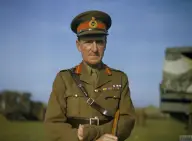
Paget at Åndalsnes — Sickleforce
Chasseurs Ardennais — the Delaying Mission
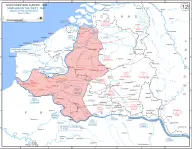
Belgian army at its limit: hold the Lys or pull back?
Bodange — Bricart and the Chasseurs Ardennais
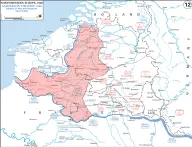
Boulogne — Fox-Pitt and the Guards facing the port
Bulson — Lafontaine and the 02:00 rumour
Calais — Nicholson facing the ultimatum
The Defence of Boulogne
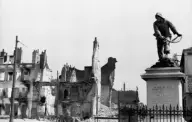
The Defence of Calais
The bridges of the Meuse
Paget at Åndalsnes — Sickleforce
Chasseurs Ardennais — the Delaying Mission
Belgian army at its limit: hold the Lys or pull back?
Bodange — Bricart and the Chasseurs Ardennais
Boulogne — Fox-Pitt and the Guards facing the port
Bulson — Lafontaine and the 02:00 rumour
Calais — Nicholson facing the ultimatum
The Defence of Boulogne
The Defence of Calais
The bridges of the Meuse
T03-015