
Göring at Carinhall — Dunkirk on the Line
, 47, Reichsmarschall and head of the Luftwaffe, is on 23 May 1940 at his Carinhall residence, the vast hunting estate of the Schorfheide, northeast of Berlin. An ace of 1918 and the regime's number 2, he follows the campaign in France from a distance.
On the ground, Sichelschnitt has succeeded: 's Panzers have reached the Channel and closed the trap on the BEF and the French armies of the North, driven back to the coast around Dunkirk. Total victory seems within tank-reach.
But this glory would go to the Heer, the ground army of Brauchitsch and Halder, Goering's rival within the Nazi system. Yet Hitler lends a particularly attentive ear to his old comrade of 1933.
On the telephone, Goering can claim the kill of the pocket for his Luftwaffe alone — without having consulted his Luftflotte commanders, Kesselring and Sperrle, or measured the wear on his units. He has a few minutes to formulate what he will say to the Führer.
Carinhall, 23 May 1940, Goering: what to promise Hitler about the fate of the Dunkirk pocket?
Goering promised at once that the Luftwaffe would finish off the BEF at Dunkirk alone. On 23 May, he telephoned Hitler and demanded that destruction of the encircled forces be entrusted primarily to the Luftwaffe. This assurance reinforced Hitler's belief that the BEF would not escape and weighed on the armoured halt order of 24 May. But the promise proved a losing bet: mediocre weather in late May, dense anti-aircraft defence over the beaches, intervention by RAF Fighter Command from England, and a rescue fleet the bombers could not break. More than 338,000 men were evacuated by Dynamo. Dunkirk inaugurated a series of aerial failures — soon the Battle of Britain — that lastingly eroded Goering's prestige. Condemned at Nuremberg, he committed suicide with cyanide on 15 October 1946, the day before his execution.
Learn more about this event
Related polls
10
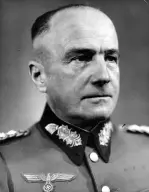
Brauchitsch — Reich Chancellery, 5 November
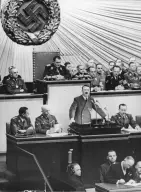
Hitler — the Reichstag Speech
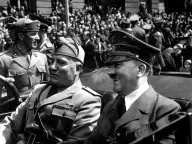
Hitler at Compiègne — 22 June 4:30 p.m.
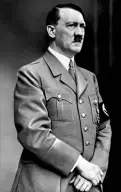
Gibraltar after the rebuff at Hendaye
Hitler faces Sea Lion — September 17
Weserübung — directive of 1 March
Before Moscow: stand fast or retreat?
Goering — the economic mobilization plan
Hitler After Molotov — Berlin, November 1940
Hitler and Fall Gelb — Setting the Date
Brauchitsch — Reich Chancellery, 5 November
Hitler — the Reichstag Speech
Hitler at Compiègne — 22 June 4:30 p.m.
Gibraltar after the rebuff at Hendaye
Hitler faces Sea Lion — September 17
Weserübung — directive of 1 March
Before Moscow: stand fast or retreat?
Goering — the economic mobilization plan
Hitler After Molotov — Berlin, November 1940
Hitler and Fall Gelb — Setting the Date
T03-061