
The Lubyanka — the Fate of 22,000 Polish Prisoners
, 41, has headed the NKVD, the Soviet political police, since 1938. A Georgian like Stalin, methodical organiser of the terror, he has inherited a problem born of the partition of Poland with Germany: tens of thousands of Polish prisoners crowd the NKVD camps.
Since the Soviet invasion of September 1939, the camps of Kozielsk, Starobielsk and Ostashkov hold regular and reserve officers, policemen, border guards, judges, doctors, professors, priests — the backbone of Polish elites. Some 22,000 men in all. Kept apart from prisoner exchanges, most refuse to renounce Poland and remain, in Moscow's eyes, irreducible "counter-revolutionaries."
These men represent a cost, a risk of uprising, and the nucleus of a future hostile Polish army. Within the Stalinist doctrine, which treats class and national belonging as a threat to be eliminated, their fate hangs on a memorandum Beria must draft for the Politburo.
On his desk, at the Lubyanka, the draft awaits his signature before going up to Stalin.
Lubyanka, Moscow, 5 March 1940, you are Beria: what fate to propose for these ~22,000 Polish prisoners?
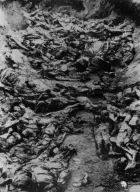
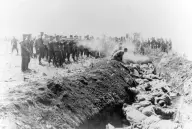
Beria drafted and signed the memorandum proposing execution by bullet. His memorandum to the Politburo described the prisoners as "hardened enemies of Soviet power" and proposed to try them "according to the special procedure" — that is, to shoot them. On 5 March 1940, Stalin, Molotov, Voroshilov, Mikoyan, Kaganovich and Kalinin signed the order. From April to May 1940, the NKVD executed approximately 21,857 Poles — including the ~4,400 of Katyn, near Smolensk — shot in the back of the neck and buried in mass graves. The USSR would deny the crime for half a century, attributing it to the Germans after the discovery of the graves in 1943. Moscow would only officially acknowledge NKVD responsibility in 1990, and the signed documents would only be published in 1992.
Learn more about this event
Related polls
10
Beria — the NKVD ordinance of 19 September
Heydrich — the Conference of 21 September
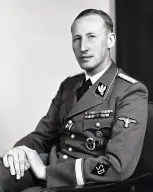
Heydrich's mandate
Serov — 10 February 06:00 at Lwów
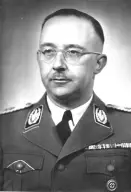
Himmler's memorandum to the Führer
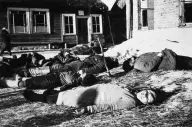
The Reich and the Resources of the Conquered East
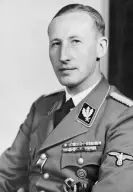
The Wannsee Villa: Aligning the Ministries
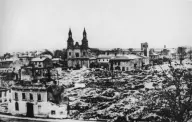
Wieluń: strike an undefended town?
Berlin sets the rules of war in the East
Gleiwitz — Naujocks at the Transmitter
Beria — the NKVD ordinance of 19 September
Heydrich — the Conference of 21 September
Heydrich's mandate
Serov — 10 February 06:00 at Lwów
Himmler's memorandum to the Führer
The Reich and the Resources of the Conquered East
The Wannsee Villa: Aligning the Ministries
Wieluń: strike an undefended town?
Berlin sets the rules of war in the East
Gleiwitz — Naujocks at the Transmitter
T03-082