
Monthermé — Portzert in the Meuse loop
40 miles north of Sedan, the Monthermé sector — a narrow loop of the Meuse known as the "Pointe de Mouton," in the French Ardennes — was defended by Colonel 's 102e Demi-brigade d'Infanterie de Forteresse. Portzert was 48. His means were meagre: about 1,800 men, 8 Hotchkiss machine guns, 4 25 mm anti-tank guns. But the terrain, dominated by a 260-foot cliff on the west bank, clearly favoured the defender.
Opposite advanced Kempf's , the spearhead of Reinhardt's corps, with more than 200 tanks and its motorised infantry. On 13 May at 14:00, the Stukas pounded Monthermé; around 15:00, the first German infiltrations crossed the river in rubber boats. But the bottleneck was so narrow that by the evening of 13 May the Germans had only just under a mile and a half of depth on the west bank.
On 14 May, while Huntziger recalled the 3e DCr toward Stonne and no reinforcement arrived, Portzert weighed what came next: hold with his 1,800 men or ask to be relieved.
Monthermé, 13 May 1940, Colonel Portzert: hold this Meuse choke point alone or fall back?
Portzert held without reinforcement, exploiting the terrain. For some 60 hours, from 13 May at 14:00 to the evening of 15 May, the pinned the in the Monthermé loop and inflicted losses — several tanks destroyed — for about 200 French dead. Reinhardt accumulated a delay of about 36 hours on the Sichelschnitt timetable, a considerable delay given the race to the sea. But on the evening of 15 May Kempf finally broke through the second line: the , encircled, was captured almost in its entirety, and Portzert taken prisoner. He would survive 5 years of captivity in Oflag IV-D and die in 1968; a monument honours him at Monthermé. Historians often cite this stand as proof that a tenacious static defence on good ground could slow the Panzers — a lesson the French high command failed to exploit.
Learn more about this event
Related polls
10
Bulson — Lafontaine and the 02:00 rumour
Calais — Nicholson facing the ultimatum
Stonne — Billotte facing the Panzer column
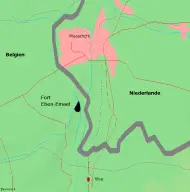
Eben-Emael — Jottrand under the explosions
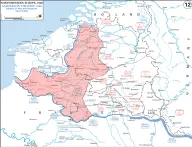
Boulogne — Fox-Pitt and the Guards facing the port
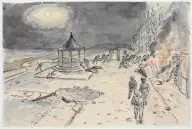
The Defence of Boulogne
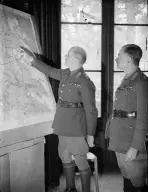
Gort at Habarcq — trust in the French plan
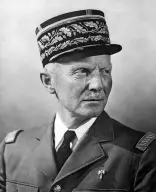
Huntziger over the Sedan reports — 13 May
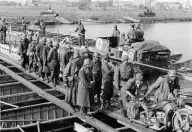
Tank Alarm at Bulson
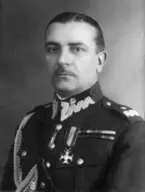
Brześć — Plisowski faces Guderian
Bulson — Lafontaine and the 02:00 rumour
Calais — Nicholson facing the ultimatum
Stonne — Billotte facing the Panzer column
Eben-Emael — Jottrand under the explosions
Boulogne — Fox-Pitt and the Guards facing the port
The Defence of Boulogne
Gort at Habarcq — trust in the French plan
Huntziger over the Sedan reports — 13 May
Tank Alarm at Bulson
Brześć — Plisowski faces Guderian
T03-049