
At the start of the school year in September 1940, life tries to resume its course under the occupation. The schools must reopen, and the occupier, anxious to normalise the situation and to influence the young, pays attention to them: curricula, textbooks and the content of lessons may become stakes of propaganda, notably in connection with the Flamenpolitik.
For you, resuming class raises concrete questions. To teach normally, maintaining as far as possible the pre-war curricula and a discreet patriotic spirit, in order to protect the young from indoctrination. To apply without question any instructions of the occupier, out of caution. Or to adapt your teaching cautiously, avoiding sensitive subjects while slipping in messages of national dignity.
The school is a terrain of influence: what one passes on to children in time of occupation engages the future. But any pedagogical resistance exposes you to sanctions. To resume class is also to give children a reassuring continuity in a world turned upside down.
September 1940, you are a schoolteacher in occupied Belgium: what stance do you take toward the occupier in your classroom?
Most teachers cautiously adapt their teaching, avoiding sensitive subjects: Belgian education on the whole maintains its curricula and its spirit, the occupier not imposing, at this stage, a massive nazification of the schools (unlike what it will do elsewhere). Pressures will mount above all through the collaborationist movements and the Flamenpolitik. Many schoolteachers strive to preserve, discreetly, the national dignity and the critical spirit of their pupils. The school becomes one of the sites of a diffuse moral resistance, where pedagogical continuity is in itself a form of refusal of regimentation. The act of reopening and holding class contributes to the maintenance of a normal civilian life under the occupation.
Learn more about this event
Related polls
10
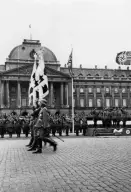
Living under occupation: get by or take a side?

The burgomaster faced with requisitions
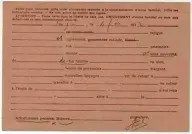
Tracing Someone Lost in the Exodus
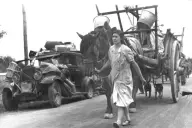
The Repatriation of the Refugees
Feeding a Family Under Rationing
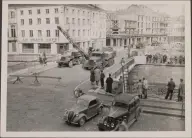
Rebuild or Wait
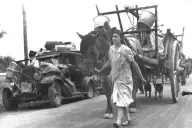
Flee or Stay — a Belgian Family, May 1940
Jobless worker: take work from the occupier?
The Windmill Under the Bombs — Soho, September 1940

The Press under German Control
Living under occupation: get by or take a side?
The burgomaster faced with requisitions
Tracing Someone Lost in the Exodus
The Repatriation of the Refugees
Feeding a Family Under Rationing
Rebuild or Wait
Flee or Stay — a Belgian Family, May 1940
Jobless worker: take work from the occupier?
The Windmill Under the Bombs — Soho, September 1940
The Press under German Control
T04-150