
Rethondes — Article 8 on the Fleet
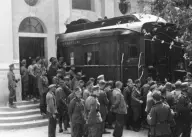
The French armistice delegation, led by General and including Ambassador , Vice-Admiral Le Luc and General Bergeret, arrives on 21 June at the Rethondes Clearing, where Hitler has had the 1918 armistice carriage brought back. The German text is presented as non-negotiable; only a few clarifications can be obtained.
The most sensitive point is Article 8, concerning the fleet. The German version provides that French ships be 'gathered in ports to be determined and disarmed.' The ambiguity is heavy: if 'ports to be determined' means German ports, the fleet risks passing under enemy control — something London dreads above all else, and what Darlan has sworn to prevent.
The delegation, caught between the urgency of concluding and the necessity of protecting the fleet, must decide which point to press with Keitel: demand an explicit guarantee of French ports, accept the vague wording to obtain the armistice as quickly as possible, or attempt a middle path.
21 June 1940, at Rethondes, you lead the French armistice delegation: how do you shield the fleet in the talks?
The delegation demands that the fleet remain in French ports and refuses any gathering in Germany. On 22 June, Huntziger obtains wording specifying that the fleet would be disarmed and controlled in French ports; Hitler consents, anxious that the ships not join the British. But the guarantee remains fragile and London's distrust is not lifted: the formula, even amended, does not convince Churchill, who fears a later German reversal. It is this distrust that will lead, 11 days later, to the attack on Mers-el-Kébir. Article 8, negotiated in Foch's carriage, illustrates how a technical clause on the fate of an intact fleet weighed on the rupture between 2 allies of the day before.
Learn more about this event
Related polls
10
Darlan and the fleet — 20 June
The Franco-British union — 16 June
De Gaulle joins the government — 5 June
The French navy disperses
Mining the Rhine — Operation Royal Marine
Reynaud or Pétain — Carry On or the Armistice
The Admiralty and the Strasbourg Rumour
Baku in the crosshairs — Operation Pike
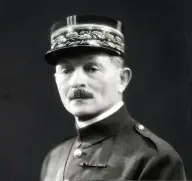
The Supreme Allied Council faces Finland
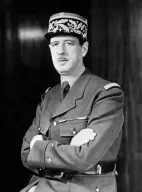
De Gaulle calls on Churchill — 9 June
Darlan and the fleet — 20 June
The Franco-British union — 16 June
De Gaulle joins the government — 5 June
The French navy disperses
Mining the Rhine — Operation Royal Marine
Reynaud or Pétain — Carry On or the Armistice
The Admiralty and the Strasbourg Rumour
Baku in the crosshairs — Operation Pike
The Supreme Allied Council faces Finland
De Gaulle calls on Churchill — 9 June
T04-032