
Rex and the Scattered Networks
lands clandestinely in the southern zone carrying a mandate signed by General himself: unify the interior Resistance under the authority of Free France. Standing before him are 3 organisations fiercely protective of their independence — Henri Frenay's , d'Astier de La Vigerie's , and Jean-Pierre Lévy's . Each has its own networks, printing presses, and leaders who distrust London as much as they distrust one another. Operating under the codename Rex, Moulin's only leverage consists of funds, radio links, and the legitimacy of the leader of Free France.
One temptation is to leave each movement functioning in isolation, limiting himself to ad hoc coordination of sabotage and escape operations without bruising egos forged in clandestinity. Another path would be to push for immediate armed action — maquis units, attacks, guerrilla warfare — at the risk of consuming men and resources before any political unification is secured. Yet Moulin calculates that a fragmented Resistance will remain marginal in Allied eyes and carry no weight at the Liberation.
He leans toward patience and material leverage: systematically distributing funds and weapons from London to make the movements dependent on central coordination while preserving their separate identities. Should he unite them by imposing 's authority, accept dispersion to avoid alienating their leaders, or sacrifice unification to the urgency of armed struggle?
Southern Zone, January 1942, general delegate of Free France: how can Jean Moulin unite rival resistance movements without breaking them?
Moulin pursued unification by using London's funds and radio links as leverage. He gradually brought , , and together, and in May 1943 established the Conseil national de la Résistance (), which placed the interior Resistance under 's authority. Arrested by 's Gestapo at on 21 June 1943, he died under torture without breaking. His work of unification proved decisive for Free France's legitimacy with the Allies.
Learn more about this event
Related polls
10
French Resistance: Fight On or Obey de Gaulle?
The Circular That Divided Norway's Schools
The Belgrade schoolteacher under the occupation
Mihailovic faces Tito's offer
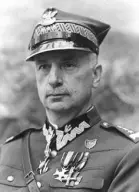
Sosnkowski — KSK, 27 November
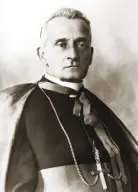
Cardinal Sapieha — Krakow under Occupation
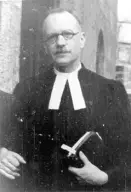
Le Chambon-sur-Lignon: Hide Them or Hand Them Over?
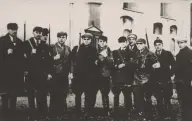
The Volksdeutscher and the Selbstschutz Call
Bishop Adamski in annexed Katowice
Mieczysław Niedziałkowski — after the arrest
French Resistance: Fight On or Obey de Gaulle?
The Circular That Divided Norway's Schools
The Belgrade schoolteacher under the occupation
Mihailovic faces Tito's offer
Sosnkowski — KSK, 27 November
Cardinal Sapieha — Krakow under Occupation
Le Chambon-sur-Lignon: Hide Them or Hand Them Over?
The Volksdeutscher and the Selbstschutz Call
Bishop Adamski in annexed Katowice
Mieczysław Niedziałkowski — after the arrest
T10-038