The Alliance That Could Not Be Broken
and have been in Washington since mid-December for the Conference, the first major Allied summit since the United States entered the war. has accelerated everything: a coalition of circumstance must be forged into a united bloc capable of holding together until final victory. Roosevelt has in mind a brief text, signed by every nation at war with the Axis, by which each would pledge to devote all of its military and economic resources to the struggle and to conclude no separate peace or armistice. He has even found a name for it: the . Churchill, woken in the middle of the night, immediately endorses the phrase.
Yet the decision is far from foregone. Roosevelt could abandon the idea of a collective pact and instead allow the United States to build its alliance network through bilateral agreements as circumstances demand, without binding 26 countries in a single legal instrument. He could also judge any formal commitment premature: the Red Army is still retreating on several fronts, Japanese forces are advancing across South-East Asia, and signing a resounding declaration before any tangible victory risks ringing hollow.
Roosevelt must choose among three paths: an immediate and solemn multilateral pact; the flexibility of case-by-case bilateral agreements; or waiting for military success before committing anything to paper.
Washington, 1 January 1942, President of the United States: what form does Roosevelt give to the collective commitment of the Allied powers?
On 1 January 1942, 26 nations signed the Declaration by , pledging to employ their full resources against the Axis and to conclude no separate peace. The term , coined by Roosevelt, first named the victorious Grand Alliance and then the international organisation founded in 1945. This founding act of the postwar order made any abandonment of the coalition impossible before the total surrender of the Axis powers.
Learn more about this event
Related polls
10
Arcadia — Germany or Japan First?
Washington: Arming the Merchant Ships
Secret staff talks in Washington
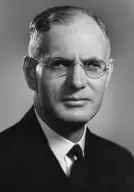
Curtin versus Churchill: the battle over the Pacific divisions
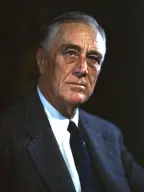
Should Stalin Be Armed?
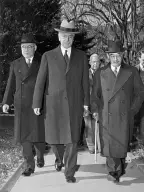
Nomura and the Hull Note: Diplomacy on the Brink
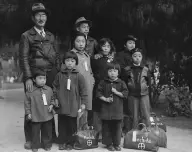
The West Coast Under Pressure — Roosevelt and EO 9066
An atomic report on the Lord President's desk
Bombers Toward Tokyo: A One-Way Mission
The War Cabinet — Negotiate or Carry On
Arcadia — Germany or Japan First?
Washington: Arming the Merchant Ships
Secret staff talks in Washington
Curtin versus Churchill: the battle over the Pacific divisions
Should Stalin Be Armed?
Nomura and the Hull Note: Diplomacy on the Brink
The West Coast Under Pressure — Roosevelt and EO 9066
An atomic report on the Lord President's desk
Bombers Toward Tokyo: A One-Way Mission
The War Cabinet — Negotiate or Carry On
T10-052