Bombers Toward Tokyo: A One-Way Mission
The destruction of the American fleet at Pearl Harbor, seven weeks earlier, had left the US Navy on the defensive. Franklin Roosevelt was demanding a visible counterstrike: hitting Japan itself, not for decisive military effect, but to lift a stunned nation's spirits and shatter the Japanese conviction that their home islands were beyond reach. Into this climate stepped Captain , an officer on King's staff, with a startling proposal: Army medium bombers, B-25s, could take off from the deck of an aircraft carrier, something no aircraft of that size had ever done. The plan carried one brutal constraint — the machines were too large to land back aboard. Crews would fly toward , drop their bombs, and then push on toward airfields in mainland China on nearly empty tanks.
King weighed the equation without illusions. Approving the audacious raid meant exposing at least 1 carrier — now an irreplaceable asset — within 1,000 kilometers of the Japanese coast, with 16 aircraft that could never return to the ship. Conventional carrier strikes against Japan's peripheral islands would deliver more modest results with far less risk. Abandoning offensive operations altogether would remove the risk but leave Roosevelt without the political demonstration he was demanding.
King understood that none of the options was without cost: a carrier lost in 1942 could not be replaced for months, yet ceding all initiative to carried its own dangers. A decision had to be made.
Washington, 31 January 1942, Chief of Naval Operations: will King authorize an unprecedented operation to strike the Japanese home islands?
King and General approved the plan and entrusted training to Lieutenant Colonel . On 18 April 1942, 16 B-25s launched from and bombed . Material damage was negligible, but the psychological shockwave ran deep: humiliated, the Imperial high command concluded that Japan's defensive perimeter had to be extended and green-lit the Midway operation, setting the stage for the Pacific war's pivotal naval turning point.
Learn more about this event
Related polls
10
The Bomb or the Laboratory
Will the RAF change its target?
Arcadia — Germany or Japan First?
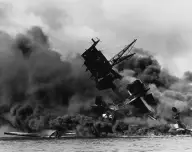
Nagumo off Oahu — the third wave
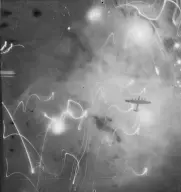
First Bombs on London — 25 August 1940
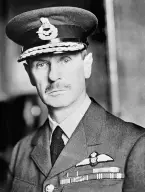
Dowding and the fighters
Secret staff talks in Washington
Demyansk: hold the pocket or break out?
Malta under the bombs: sacrifice the island vs Rommel?
Curtin versus Churchill: the battle over the Pacific divisions
The Bomb or the Laboratory
Will the RAF change its target?
Arcadia — Germany or Japan First?
Nagumo off Oahu — the third wave
First Bombs on London — 25 August 1940
Dowding and the fighters
Secret staff talks in Washington
Demyansk: hold the pocket or break out?
Malta under the bombs: sacrifice the island vs Rommel?
Curtin versus Churchill: the battle over the Pacific divisions
T10-051