
Will the RAF change its target?
Sir enters 1942 confronted with statistics that shatter his assumptions. The , compiled by civil servant David Bensusan-Butt, has established that on recent missions barely 1 bomber in 3 dropped its bombs within 8 kilometres of the target; over the , shrouded in industrial haze, that figure fell to 1 in 10. Crews were not coming home unscathed either: daylight formations were being slaughtered by German fighters, while night precision bombing had proved an illusion that the darkness itself made impossible. Meanwhile Stalin was demanding an immediate second front, and Churchill needed to show that Britain was striking the enemy on his own soil.
Portal knows that in this winter is the only British force capable of reaching the Reich directly. Three paths lie before him, each carrying its own weight of consequence. He can break with the precision doctrine and order night bombing of Germany's major cities — targeting their urban fabric, their dispersed industry, the morale of the workers feeding the armament factories; it is a brutal calculus, but perhaps the only honest use of the weapon at hand. He can instead maintain pressure on identified industrial targets — refineries, steelworks, rail junctions — and absorb heavy losses in the hope that navigation technology will improve quickly enough. Or he can abandon the strategic offensive altogether and redeploy his squadrons where the admirals and generals need them most: the Mediterranean, the Atlantic, the defence of convoys.
Each option commits the future of an entire arm of service, the fate of thousands of German civilians, and the credibility of an ally whose only way of fighting is its refusal to stop.
Air Ministry, London, 14 February 1942, Chief of the Air Staff: what doctrine must Sir Charles Portal impose on Bomber Command to carry the war into Germany?
Portal issued the Area Bombing Directive on 14 February 1942. On 22 February, took command of and applied the directive with an intensity that would define the air war: the thousand-bomber raid on in May 1942, the firestorm over in July 1943, the lasting controversy over in February 1945. The strategic bombing campaign absorbed roughly one third of Britain's wartime industrial effort and killed hundreds of thousands of German civilians, while also costing the lives of nearly 56,000 airmen.
Learn more about this event
Related polls
10
First Bombs on London — 25 August 1940
Dowding and the fighters
Bombers Toward Tokyo: A One-Way Mission
Demyansk: hold the pocket or break out?
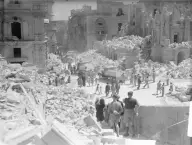
Malta under the bombs: sacrifice the island vs Rommel?
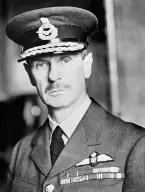
Dowding and the Defence of British Skies
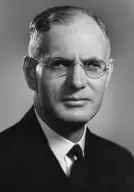
Curtin versus Churchill: the battle over the Pacific divisions
Dowding and the Last Reserves — 15 September 1940
Dowding — Keep the Fighters?
Eagle Day
First Bombs on London — 25 August 1940
Dowding and the fighters
Bombers Toward Tokyo: A One-Way Mission
Demyansk: hold the pocket or break out?
Malta under the bombs: sacrifice the island vs Rommel?
Dowding and the Defence of British Skies
Curtin versus Churchill: the battle over the Pacific divisions
Dowding and the Last Reserves — 15 September 1940
Dowding — Keep the Fighters?
Eagle Day
T10-041