Dowding and the Defence of British Skies
Since the mid-1930s, the United Kingdom dreads above all the bomber: it is then believed that 'the bomber will always get through', and that no defence can stop a massive aerial attack. The physicist had nonetheless demonstrated, in 1935, that an aircraft could be detected at a distance thanks to radio waves.
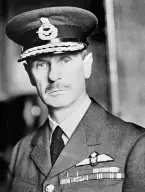
At the head of Fighter Command, Air Chief Marshal follows these works closely. By the summer of 1939, a chain of detection stations — Chain Home — has been installed along the approaches to England, but the system remains young, fragile and never tested under fire. Linked to filtering and control centres, this nascent technology promises much, with no guarantee that it will hold on the day.
The doctrine is not settled. Should the whole of air defence be founded on this still-uncertain detection-and-control arrangement, concentrating the means on it, at the risk that it fail? Rely, as in the past, on permanent patrols and the network of ground observers? Or scatter the effort among several approaches without favouring any? The choice will determine the effectiveness of British fighter aviation if war breaks out.
United Kingdom, June 1939, you are Dowding at Fighter Command: on what system should the country's air defence be founded?
Dowding built the defence around the radar system and control centres: British air defence is organised around Chain Home and an integrated system linking radars, observers, filtering centres and squadrons — what will be called the 'Dowding system'. Kept secret, this arrangement makes it possible to economise the fighters by launching them only on detected targets, instead of exhausting the pilots in blind patrols. It is this network, more than the number of aircraft, that will give the Royal Air Force its decisive advantage during the Battle of Britain the following year. Other countries are also working on radioelectric detection, but none has, in 1939, integrated radar into so accomplished a command system.
Learn more about this event
Related polls
10
Dowding and the Last Reserves — 15 September 1940
Whittle and the Jet Engine
First Bombs on London — 25 August 1940
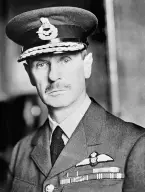
Dowding and the fighters
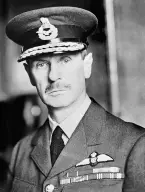
Dowding — Keep the Fighters?
Enigma — the Polish Cipher Bureau's Dilemma
Keith Park at Uxbridge — September 15
The Polish Pilots of 303 Squadron
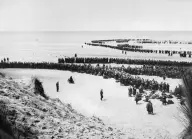
Ramsay at Dover Castle — Dynamo
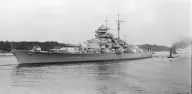
Tovey — the Bismarck running for France
Dowding and the Last Reserves — 15 September 1940
Whittle and the Jet Engine
First Bombs on London — 25 August 1940
Dowding and the fighters
Dowding — Keep the Fighters?
Enigma — the Polish Cipher Bureau's Dilemma
Keith Park at Uxbridge — September 15
The Polish Pilots of 303 Squadron
Ramsay at Dover Castle — Dynamo
Tovey — the Bismarck running for France
T00-019