
Arcadia — Germany or Japan First?
and meet at the White House for the Conference, barely 2 weeks after the attack on . America burns with humiliation: in the streets, in the press, in Congress, a near-unanimous fury demands the nation turn to the Pacific to crush Japan. General and Admiral King await only a signal to demand massive reinforcements toward Asia.
Churchill has crossed the in urgent haste precisely to prevent that shift. The secret ABC-1 agreement, negotiated in early 1941, had already established the principle: Nazi Germany, the dominant industrial power of the European continent, represents the priority existential threat. Breaking that agreement under public pressure would hand Hitler the breathing room he needs, while the USSR fights alone in the east.
The 2 men must decide: reaffirm the 'Germany First' doctrine — defeat Germany before all else, holding defensively in the Pacific for as long as needed; yield to popular pressure and shift the Allied centre of gravity to the Pacific to avenge , at the risk of leaving Europe to Hitler; or split resources equally between the 2 theatres, a half-measure that would weaken the chances of victory on each front.
Washington, 22 December 1941, Roosevelt and Churchill: against which enemy should the Allies concentrate their main war effort?
Roosevelt and Churchill confirmed the 'Germany First' strategy at the Conference (December 1941 – January 1942) and established the , the Anglo-American joint command tasked with coordinating the war effort. This overarching orientation would shape all Allied strategy through 1945: Germany would be defeated before the Allies concentrated their full strength for the final offensive against Japan.
Learn more about this event
Related polls
10
Secret staff talks in Washington
Bombers Toward Tokyo: A One-Way Mission
Curtin versus Churchill: the battle over the Pacific divisions

The Bomb or the Laboratory

The Alliance That Could Not Be Broken
First Bombs on London — 25 August 1940
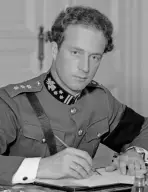
The Capitulation of 28 May
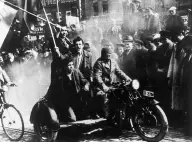
The Belgrade coup
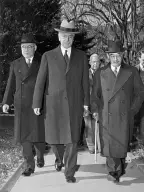
Nomura and the Hull Note: Diplomacy on the Brink
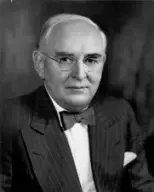
Washington: Arming the Merchant Ships
Secret staff talks in Washington
Bombers Toward Tokyo: A One-Way Mission
Curtin versus Churchill: the battle over the Pacific divisions
The Bomb or the Laboratory
The Alliance That Could Not Be Broken
First Bombs on London — 25 August 1940
The Capitulation of 28 May
The Belgrade coup
Nomura and the Hull Note: Diplomacy on the Brink
Washington: Arming the Merchant Ships
T10-016