
Wake: should a carrier be risked to save the garrison?
Vice Admiral inherits a shattered command. Named to lead the Pacific Fleet after Admiral 's relief in the days following , he is managing a crisis not of his making, one that presses on him from every direction. Some 1,600 miles northwest of Hawaii, the small garrison at - roughly 450 Marines and hundreds of civilians - is fighting with stunning tenacity: on 11 December, it repelled a first Japanese landing attempt, sinking 2 enemy destroyers and inflicting severe losses.
A relief force built around the carrier has been steaming toward the island for several days. But intelligence is unambiguous: Japanese carriers detached from the , the carrier strike force that hit , are operating in the area. American carriers are now a scarce resource - the , the , the : 3 ships to cover the entire Pacific Ocean. Losing one would mean facing 1942 with virtually no embarked air cover.
Pye must decide before the window closes: recall the relief force immediately and abandon to its fate, preserving the for the battles ahead; hold course and press on to despite the prospect of a confrontation with enemy carriers; or send only the 's air group to reinforce the island without committing the surface ships into such dangerous waters.
Pearl Harbor, 22 December 1941, acting commander of the Pacific Fleet: how far should the relief be pressed to save Wake?
On the evening of 22 December, Pye orders the relief force recalled when it is only a few hundred miles from . The atoll surrenders on 23 December. The decision generates profound bitterness in the Navy - officers and sailors reportedly wept on learning of the turnaround - and is sharply criticized for decades. It does, however, keep the intact for the battles of the Coral Sea and Midway in 1942, where American carriers prove decisive.
Learn more about this event
Related polls
10
Phillips and Force Z — sail without air cover?
Odessa: evacuate or hold the siege?
Convoy HG-76 — the escort under the wolf-pack
Manila or Bataan?
Arcadia — Germany or Japan First?
Malta under the bombs: sacrifice the island vs Rommel?
Percival and Yamashita's Ultimatum
The Impossible Command
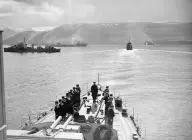
The Route of the Worst Journey in the World
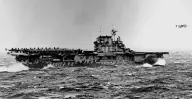
Bombers Toward Tokyo: A One-Way Mission
Phillips and Force Z — sail without air cover?
Odessa: evacuate or hold the siege?
Convoy HG-76 — the escort under the wolf-pack
Manila or Bataan?
Arcadia — Germany or Japan First?
Malta under the bombs: sacrifice the island vs Rommel?
Percival and Yamashita's Ultimatum
The Impossible Command
The Route of the Worst Journey in the World
Bombers Toward Tokyo: A One-Way Mission
T10-022