
General commands American and Philippine forces on as General 's 14th Army pours ashore from Gulf. The 80,000 hastily mobilized Philippine soldiers have collapsed on the beaches in under 48 hours, exposing the flaw in MacArthur's bet on coastal defense. , the capital and the hub of all logistical supply, now lies open; a decision must be reached before Japanese armored columns cut the roads to the south.
Three paths present themselves. The old , prepared years in advance for precisely this contingency, called for abandoning without a fight, declaring it an open city to spare civilians, and withdrawing all forces into the Peninsula and onto the fortress island of , where they would hold out until reinforcements arrived from Hawaii or the mainland. The alternative of defending street by street could delay the enemy and protect the vast stores of food and ammunition stockpiled in the city, but at the cost of exposing 600,000 civilians to urban combat and risking the encirclement and destruction of the entire garrison. A third option exists: launch an immediate counterattack against the beachheads and attempt to drive Homma back into the sea before his divisions can fully deploy.
The withdrawal to under WPO-3 is the only operationally coherent maneuver, yet it demands flawless coordination of columns crossing one another on congested roads, and it surrenders to the Japanese the supply depots that should have sustained the garrison for months. The counterattack is tempting but suicidal against an army that swept aside the beach defenses within hours. Defending , finally, would sacrifice the city and with it any prospect of an organized resistance.
Luzon, 24 December 1941, commander of US and Philippine forces: how to respond to the Japanese advance threatening to encircle the Luzon defenders?
MacArthur declared an open city on 26 December 1941 and ordered the withdrawal to . The maneuver succeeded militarily, but in the rush the supply depots were abandoned or only partially destroyed. Starved of food and without reinforcements, the garrison held until 9 April 1942 before surrendering in the largest capitulation in American military history. The survivors endured the Death March. MacArthur, evacuated in March 1942 on President Roosevelt's orders, delivered his historic promise: I shall return. He kept it in October 1944.
Learn more about this event
Related polls
10
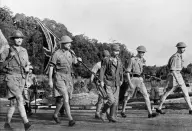
Percival and Yamashita's Ultimatum
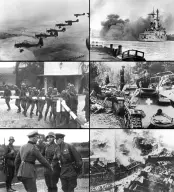
The Polish Army and the Deployment
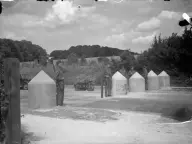
"Cromwell" — England, 7 September 1940
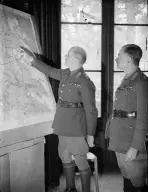
Gort at Habarcq — trust in the French plan
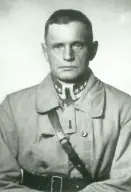
Gudbrandsdal — Ruge and the Allied Plans
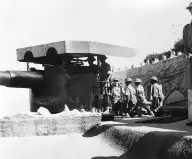
Hong Kong's Christmas — Maltby and the Surrender
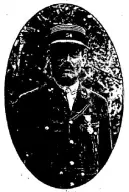
Touchon on the Aisne — Fall Rot
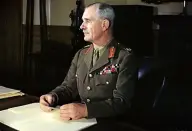
Wavell in the face of Rommel's storm
Phillips and Force Z — sail without air cover?
Slim River: Hold or Break?
Percival and Yamashita's Ultimatum
The Polish Army and the Deployment
"Cromwell" — England, 7 September 1940
Gort at Habarcq — trust in the French plan
Gudbrandsdal — Ruge and the Allied Plans
Hong Kong's Christmas — Maltby and the Surrender
Touchon on the Aisne — Fall Rot
Wavell in the face of Rommel's storm
Phillips and Force Z — sail without air cover?
Slim River: Hold or Break?
T10-023