
General Sir receives at a mission without precedent: to take command of , the American-British-Dutch-Australian Command, the first unified Allied command of the war. The has just invented it from scratch to coordinate the defence of South-East Asia, and it is Wavell whom Churchill and Roosevelt have chosen to lead it.
Yet the theatre he is handed is already collapsing under Japanese blows. is being overrun, the Philippines are under siege, and the are absorbing successive landings. Under his nominal authority stand British, American, Dutch and Australian units that share no common doctrine, no compatible communications systems, and no single language of command. Air cover is negligible, and the Allied naval forces too scattered to hold the straits. Wavell grasps at once that is a shell.
3 paths lie before him. He can accept the command as it stands, despite its glaring lack of resources, betting that Allied coordination, even symbolic, is worth more than chaos among 4 national armies answering to no one. He can instead refuse a charge that is plainly doomed, one that will consume only his reputation and leave him without credibility for the rest of the war. Or he can accept, but abandon any pretence of defending 5,000 kilometres of front, concentrating whatever forces remain on a single defensible redoubt — — rather than losing everything everywhere at once. The decision will shape Allied fortunes across Asia.
Java, 15 January 1942, Supreme Commander-designate of ABDACOM: what to do with a unified command that has no means to exercise it?
Wavell accepts. Denied any real fighting power, cannot stop the Japanese advance: falls on 15 February 1942 and the are overwhelmed. The command is dissolved on 25 February, just 6 weeks after its creation. The failure is not entirely in vain: the principle of a unified Allied command is taken up again, far better resourced, for the great Allied campaigns of 1943 and 1944.
Learn more about this event
Related polls
10
Manila or Bataan?
Percival and Yamashita's Ultimatum
Phillips and Force Z — sail without air cover?
Rangoon on the Brink
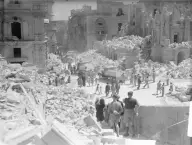
Malta under the bombs: sacrifice the island vs Rommel?
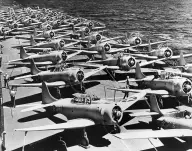
Wake: should a carrier be risked to save the garrison?
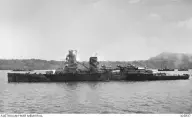
Java Sea — Doorman and the ABDA Squadron
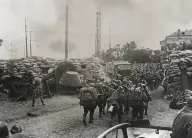
Odessa: evacuate or hold the siege?
The Polish Army and the Deployment
"Cromwell" — England, 7 September 1940
Manila or Bataan?
Percival and Yamashita's Ultimatum
Phillips and Force Z — sail without air cover?
Rangoon on the Brink
Malta under the bombs: sacrifice the island vs Rommel?
Wake: should a carrier be risked to save the garrison?
Java Sea — Doorman and the ABDA Squadron
Odessa: evacuate or hold the siege?
The Polish Army and the Deployment
"Cromwell" — England, 7 September 1940
T10-030