Strike America or hold the Atlantic?
Admiral is watching from an opportunity the war has not yet offered. Since 11 December 1941, the United States has been at war, and its seaboard remains staggeringly exposed. Cities from New York to Miami enforce no blackout whatsoever; at night, tankers and freighters stand out in perfect silhouette against the glow of neon signs and lighthouses, presenting themselves like training-range targets to any prowling U-boat. No organized convoy system yet exists in these waters.
Dönitz can arm only a handful of U-boats, the sole vessels with sufficient range to reach the American coast and return. Hitler is pressing for submarines to be redeployed to the Mediterranean to support Rommel and the , and to to defend a coastline the Führer considers threatened. Meanwhile, the North convoys continue pouring war matériel and provisions into beleaguered Britain: interdicting them remains the 's primary strategic objective.
Caught in this three-way pull, Dönitz must decide without delay. He can launch Operation , the drumbeat, dispatching his scarce Type IXs to strike at point-blank range off American ports; concentrate instead all available forces against the transatlantic convoys, the vital lifeline of British resistance; or yield to the high command's demands and redeploy his submarines to the Mediterranean and , abandoning the western to its own turmoil.
East Coast of the United States, 13 January 1942, commander of the U-boat arm: where to commit the scarce long-range U-boats?
Dönitz launched on 13 January 1942 with 5 U-boats. The results exceeded all expectations: with no coastal blackout and no organized convoy system in place, German crews spoke of a zweite glückliche Zeit, a second happy time, so freely did targets present themselves within torpedo range. From January to July 1942, more than 400 vessels were sunk in American and Caribbean waters, amounting to millions of gross tons. Tankers burning in sight of Florida beaches, wrecks foundering a few hundred metres from shore: the maritime disaster ranks among the worst in American history. Only in May through July 1942 did the United States impose a coastal blackout and finally organize a convoy network, bringing the U-boats' hunting season to an end.
Learn more about this event
Related polls
10
Nagumo off Oahu — the third wave
Yamamoto and the Next Offensive
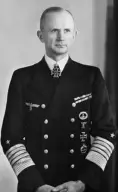
Dönitz and Operation Drumbeat
Pearl Harbor: force the raid or yield?
Fall Gelb — the order of 9 May 20:00
Göring at Cap Gris-Nez — September 7
Hitler signs the Barbarossa directive
March 1943 — where to place the escorts?
Mussolini and the Greek plan — Rome, 15 October 1940
The Manstein Plan Under Debate
Nagumo off Oahu — the third wave
Yamamoto and the Next Offensive
Dönitz and Operation Drumbeat
Pearl Harbor: force the raid or yield?
Fall Gelb — the order of 9 May 20:00
Göring at Cap Gris-Nez — September 7
Hitler signs the Barbarossa directive
March 1943 — where to place the escorts?
Mussolini and the Greek plan — Rome, 15 October 1940
The Manstein Plan Under Debate
T10-025