
Fall Gelb — the order of 9 May 20:00
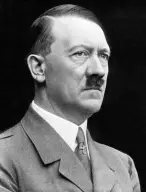
After 6 months of phoney war and 29 successive postponements, Fall Gelb is at last launched. Hitler gives the order on 9 May 1940 at 20:00, in a curt formula: "Fall Gelb, X-Tag = 10.5.1940." That same evening, he leaves Berlin aboard his special train Amerika and reaches, on the morning of 10 May, his advanced headquarters at the Felsennest, near Mönichkirchen, in the Eifel.
The plan adopted is the Sichelschnitt devised by Manstein, which launches 3 army groups simultaneously. In the north, 's is to fall on the Netherlands and northern Belgium to draw in the Allies. In the centre, 's delivers the main blow, breaking through the Ardennes towards Sedan and on to the Channel. In the south, 's confines itself to fixing the Maginot Line passively.
The forces engaged are considerable: 3 million Germans, 2500 tanks — of which only 800 are modern Panzer III and IV models — and 5000 aircraft. Facing them stand 2 million Allies, namely the British Expeditionary Force, the French army, the Belgians and the Dutch, fielding 3600 technically superior tanks on the French side, with the B1 bis and the Somua S35, and 3000 aircraft.
At 04:35, the offensive is launched everywhere at once, in near-total operational surprise. From the first hours, commandos seize 130 bridges, paratroopers descend on the Netherlands, and the assault on Eben-Emael begins. Hitler must at once set the operational tempo of his Panzers.
What operational tempo should Hitler impose on the Wehrmacht?
Hitler and the Panzer commanders — Guderian, Rommel, Reinhardt, Hoth — apply B. The Blitzkrieg doctrine reaches its perfection in 6 weeks: breakthrough at Sedan on 13 May, the Atlantic reached at Abbeville on 20 May, encirclement of 800,000 Allies in the "Flanders pocket". The French collapse will be complete on 22 June 1940. The final balance of Fall Gelb and Fall Rot stands at about 27,000 German dead, 100,000 French dead, 1.8 million French prisoners, 30,000 British dead, and 15,000 Belgian and Dutch dead. The Wehrmacht reaches a pinnacle of military prestige; Hitler becomes the most powerful man in continental Europe. May-June 1940 remains one of the most complete victories in modern military history — comparable to Austerlitz 1805, Sedan 1870, Tannenberg 1914.
Learn more about this event
Related polls
10
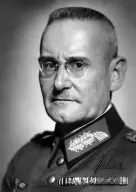
Which heart to strike in the East?
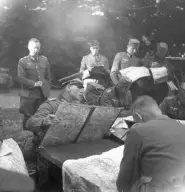
The crossing of the Meuse at Dinant
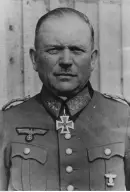
Guderian and the stop order
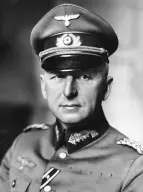
The Manstein Plan Under Debate
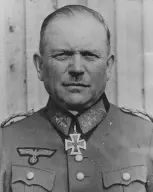
Sedan — Guderian on the Meuse
Before Moscow: stand fast or retreat?
Hitler signs the Barbarossa directive
Saving an ally bogged down in the mountains
Göring at Carinhall — Dunkirk on the Line
Göring at Cap Gris-Nez — September 7
Which heart to strike in the East?
The crossing of the Meuse at Dinant
Guderian and the stop order
The Manstein Plan Under Debate
Sedan — Guderian on the Meuse
Before Moscow: stand fast or retreat?
Hitler signs the Barbarossa directive
Saving an ally bogged down in the mountains
Göring at Carinhall — Dunkirk on the Line
Göring at Cap Gris-Nez — September 7
T03-018