Java Sea — Doorman and the ABDA Squadron
Rear Admiral leads through the waters of a scratch force that nothing had prepared to fight as one. His cruisers — , , HMS , USS , HMAS — and a handful of destroyers belong to 4 navies, speak 4 languages, and operate on incompatible radio codes. The crews have not slept in days; not a single Allied aircraft patrols overhead. On the northern horizon, Japanese transports packed with assault troops are converging on , screened by cruisers and destroyers armed with torpedoes whose range and power outclass anything the force can bring to bear.
Doorman has been ordered to intercept the convoy. But time is running out and his options are narrowing. He can throw his entire mismatched squadron into a frontal assault, accept certain losses to try to reach the transports before is overrun; he can preserve his ships, withdraw toward the Sunda Strait to cover an evacuation and defer a battle that already looks lost; or he can keep the at arm's length and send only destroyers and submarines to harry the convoy's flanks.
Every hour of inaction brings the transports closer to 's beaches. Doorman knows that total naval defeat will leave the island defenceless — but that a frontal attack may mean the end of Force, and his own.
Java Sea, 27 February 1942, rear admiral commanding the ABDA force: how to stop the Japanese invasion convoy with a mismatched Allied squadron?
Doorman chose to attack: 'Ik val aan, volg mij' — 'I am attacking, follow me.' On 27–28 February, the squadron was annihilated by torpedoes and Japanese gunfire. HMS , USS , HMAS , , and were all sunk; Doorman went down with his flagship. Not a single Japanese transport was hit. surrendered in early March 1942, and Allied naval power in the South-West Pacific was effectively destroyed.
Learn more about this event
Related polls
10
The Last Stand of Perth and Houston
Boulogne — Fox-Pitt and the Guards facing the port
Hel — Unrug faces the German envoy
Narvik Taken — the War Cabinet's Dilemma

Odderoya — an identity in the mist
Oscarsborg — the intruder in the Oslofjord
Percival and Yamashita's Ultimatum
Slim River: Hold or Break?
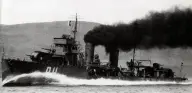
Badung Strait: Striking the Bali Convoy
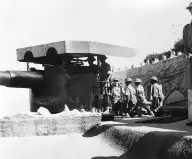
Hong Kong's Christmas — Maltby and the Surrender
The Last Stand of Perth and Houston
Boulogne — Fox-Pitt and the Guards facing the port
Hel — Unrug faces the German envoy
Narvik Taken — the War Cabinet's Dilemma
Odderoya — an identity in the mist
Oscarsborg — the intruder in the Oslofjord
Percival and Yamashita's Ultimatum
Slim River: Hold or Break?
Badung Strait: Striking the Bali Convoy
Hong Kong's Christmas — Maltby and the Surrender
T10-021