
Pacific Coast: Stay or Report to the Assembly Centre?
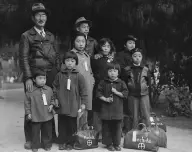
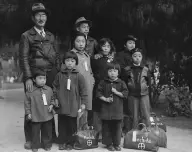
A Japanese Canadian lives on the coast, where his family has fished for salmon for a generation. Many of his people were born in Canada and have never seen Japan; they are nonetheless branded as suspects after Canada went to war with Tokyo in December 1941, when the authorities seized nearly 1,200 fishing boats owned by people of Japanese descent.
Fear and hostility rise across the province. The local press and politicians demand the removal of the whole community, even though the police and the army judge that it poses no threat. On 26 February 1942, 's government orders the evacuation of all persons of Japanese ancestry from a 100-mile zone along the coast. Families may take only the barest baggage; everything else — homes, businesses, boats, cars — is handed to an official custodian.
He must decide what to do with his family and his livelihood. He can obey and report to the assembly centre at , in , hoping to avoid trouble; try to stay put by surrendering his property and his boat to buy a reprieve; or send his wife and children to the interior while he looks for work, risking a family split for long months.
Vancouver, February 1942, a Japanese Canadian fisherman: how should he answer the order to evacuate the Pacific coast?
The order left no room: about 22,000 Japanese Canadians — three-quarters of them Canadian citizens — were removed from the Pacific coast in 1942. Thousands passed through , in , penned in livestock buildings before being shipped to internment camps in the interior, to sugar-beet farms on the Prairies, or to labour camps. Men were often separated from their families. In 1943 the custodian of property sold homes, businesses and boats without the owners' consent, wiping out the work of a lifetime. The restrictions lasted until 1949, four years after the war ended. No charge of espionage was ever laid. On 22 September 1988, Prime Minister issued a formal apology on behalf of Canada and granted redress, acknowledging a grave violation of citizens' fundamental rights.
Learn more about this event
Related polls
10
A Few Days to Settle Everything Before Evacuation
The West Coast Under Pressure — Roosevelt and EO 9066
Darwin: what to tell the nation?
The Circular That Divided Norway's Schools
Blockade and Famine: A Gap for Greece?
Before the Tribunal: Conscience Against the Uniform
Le Chambon-sur-Lignon: Hide Them or Hand Them Over?

The Church in a Threatened Moscow
The Belgrade schoolteacher under the occupation

The Parisian concierge facing informing under the Occupation
A Few Days to Settle Everything Before Evacuation
The West Coast Under Pressure — Roosevelt and EO 9066
Darwin: what to tell the nation?
The Circular That Divided Norway's Schools
Blockade and Famine: A Gap for Greece?
Before the Tribunal: Conscience Against the Uniform
Le Chambon-sur-Lignon: Hide Them or Hand Them Over?
The Church in a Threatened Moscow
The Belgrade schoolteacher under the occupation
The Parisian concierge facing informing under the Occupation
T10-093