
Before the Tribunal: Conscience Against the Uniform
In the Britain of 1942, a man called up for service refuses to bear arms. In the eyes of the law he is a conscientious objector, and his case falls to a , a local body placed under the authority of the rather than the army. Before three or four judges, he must set out his reasons — religious, political or moral — and accept that they will rule.
The memory of the Great War hangs over the scene. In 1916-1918, objectors had been treated harshly, many thrown into prison, some sent to the front against their will. The new law of 1939 aims to be more humane: it provides for unconditional exemption, assignment to civilian work of national importance, or enrolment in unarmed units. But the tribunals remain uneven from one town to the next, and a poorly framed refusal can lead to a cell.
The man must decide how to answer the judges: accept non-combatant service — stretcher-bearer in the , bomb disposal, civil defence — to serve without killing; ask to be assigned to civilian work of national interest, in agriculture or the mines, away from any military structure; or refuse all participation on grounds of conscience alone, at the risk of being sentenced to prison.
United Kingdom, February 1942, before a local tribunal: how should a conscientious objector answer the summons that will decide his fate?
During the war, nearly 60,000 men (about 59,200 registered) sought conscientious objector status in the United Kingdom — a far larger and far better-treated movement than in 1916-1918. The local tribunals, under the , proved on the whole more tolerant: unconditional exemption remained rare, but roughly three-quarters of applicants were directed toward work of national importance or unarmed duties — agriculture, mining, stretcher-bearing, ambulance units such as the , or the assigned to logistical tasks. Rejection rates varied sharply from one tribunal to another, from 6 to 41 percent. Only about 3 percent of the men were imprisoned, most often the "absolutists" who refused even the principle of the summons, against nearly a third during the First World War.
Learn more about this event
Related polls
10

Women Called to Service
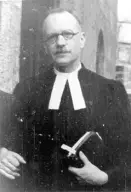
Le Chambon-sur-Lignon: Hide Them or Hand Them Over?
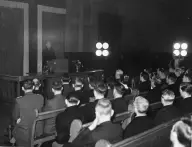
The Circular That Divided Norway's Schools
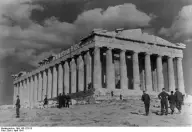
Blockade and Famine: A Gap for Greece?

Cambridge, 1939: The Evacuated LSE Student and Conscription

Darwin: what to tell the nation?
The Channel Islands — open city?
British rationing put to the test in 1941
A Few Days to Settle Everything Before Evacuation
British rationing — Morrison and the principle
Women Called to Service
Le Chambon-sur-Lignon: Hide Them or Hand Them Over?
The Circular That Divided Norway's Schools
Blockade and Famine: A Gap for Greece?
Cambridge, 1939: The Evacuated LSE Student and Conscription
Darwin: what to tell the nation?
The Channel Islands — open city?
British rationing put to the test in 1941
A Few Days to Settle Everything Before Evacuation
British rationing — Morrison and the principle
T10-099