Six Swordfish Against the Squadron — the Channel Dash
Lieutenant-Commander receives the news mid-morning: , and are racing up the Channel in broad daylight, having slipped out of under cover of darkness. Operation is a staggeringly bold German gamble, now fully in motion. The 3 warships advance beneath a rotating umbrella of fighters that never leaves a gap; an escort of destroyers and torpedo boats hugs their flanks. The RAF, caught off guard by the Germans' timing, struggles to mount a coherent counter-strike.
Esmonde has only 6 biplane torpedo bombers, whose top speed barely exceeds 150 mph. The Spitfires promised as escort arrive late and in derisory numbers: just 10 aircraft from 2 different squadrons. No formal order compels him to attack.
He can attack at once, accepting near-certain loss of his crews and himself; he can insist on waiting for a complete escort and a strike coordinated with the bombers already airborne, risking letting the squadron slip beyond range; or concede that the Kent coastal batteries, destroyers and torpedo boats are the only weapons that can realistically strike, and spare his men. The squadron is making 27 knots: every minute brings it closer to German ports.
Strait of Dover, 12 February 1942, commanding officer of 825 Naval Air Squadron: how to respond to the German squadron's daylight break-out?
Esmonde attacked. The 6 flew into a wall of German fire; not one reached the squadron, and no torpedo found its mark. All 18 aircrew were killed or lost at sea — Esmonde among the first to fall. and struck mines approaching German ports, but the squadron reached home: a resounding humiliation for the Royal Navy and the RAF, even if pulling the ships out of the Atlantic ultimately served the Allies. Esmonde was awarded the posthumously.
Learn more about this event
Related polls
10
Bergen — the Skuas at extreme range
Convoy HG-76 — the escort under the wolf-pack
Whitworth and the Warspite — 13 April
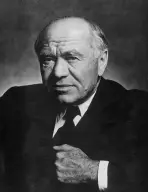
The fate of the victors — Air Ministry, November 1940
Fegen and the Jervis Bay — convoy HX-84
Halsey at the Marshalls: Strike or Hold Back?
HMS Courageous — Makeig-Jones after the Torpedoes
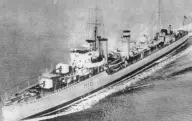
HMS Daring in the Pentland Firth
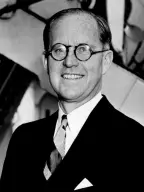
HMS Rawalpindi — Kennedy at 3:47 p.m.
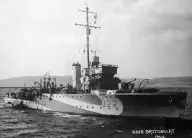
HMS Sphinx at Kinnaird Head
Bergen — the Skuas at extreme range
Convoy HG-76 — the escort under the wolf-pack
Whitworth and the Warspite — 13 April
The fate of the victors — Air Ministry, November 1940
Fegen and the Jervis Bay — convoy HX-84
Halsey at the Marshalls: Strike or Hold Back?
HMS Courageous — Makeig-Jones after the Torpedoes
HMS Daring in the Pentland Firth
HMS Rawalpindi — Kennedy at 3:47 p.m.
HMS Sphinx at Kinnaird Head
T10-018