
Halsey at the Marshalls: Strike or Hold Back?
Two months after Pearl Harbor, the US Navy is licking its wounds, and its carriers are treated as irreplaceable relics that no admiral dares to risk. Admiral Chester breaks that taboo: he assigns Vice Admiral the mission of striking Japanese bases in the and Islands, through poorly charted waters, thousands of miles from any reinforcement. The order is deliberately vague on one critical point — how close to the atolls should Halsey actually go?
Naval planners had long debated the vulnerability of carriers to land-based aviation. Pressing in close to the atolls to launch a bold air and surface strike would expose the to Japanese bombers based at and Wotje, risking a catastrophic loss. Settling for a cautious long-range raid, staying well out of retaliatory reach, would keep the ship safe but produce negligible damage and disappoint Washington. Pulling back entirely to confine the carriers to the defense of Hawaii would satisfy the most conservative voices, but leave Japan free to consolidate its empire without pressure.
Halsey has a reputation as a fighter who does not wait. His staff is plotting attack windows, his aviators are itching to go, and expects results. The night before the raid, the is already in position: the moment of truth is approaching for a navy still searching for its doctrine of war.
Marshall Islands, 1 February 1942, Task Force 8 commander: how far can Halsey push the Enterprise without sacrificing one of the handful of carriers the US Navy has left?
On 1 February 1942, Halsey launched his aircraft close in against the atolls of , Wotje, and Maloelap. Material damage was modest — some ships damaged, installations partially destroyed — but the bold stroke galvanized a battered navy. American aviators gained their first offensive combat experience, Halsey earned his reputation as an aggressive fighter, and the raid established the hit-and-run carrier doctrine that would lead, three months later, to the Coral Sea and then to Midway.
Learn more about this event
Related polls
10
Six Swordfish Against the Squadron — the Channel Dash
The Fire Night at Balikpapan
Convoy HG-76 — the escort under the wolf-pack
Strike America or hold the Atlantic?
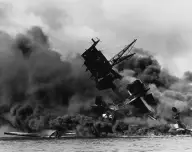
Nagumo off Oahu — the third wave
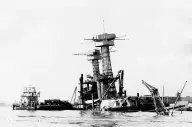
The Pearl Harbor Wrecks: Salvage or Not?
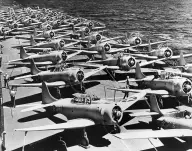
Wake: should a carrier be risked to save the garrison?
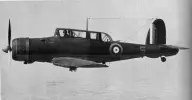
Bergen — the Skuas at extreme range
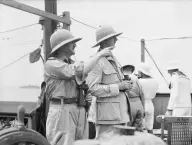
Dakar — de Gaulle and Operation Menace
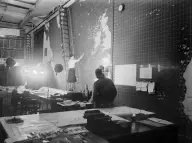
March 1943 — where to place the escorts?
Six Swordfish Against the Squadron — the Channel Dash
The Fire Night at Balikpapan
Convoy HG-76 — the escort under the wolf-pack
Strike America or hold the Atlantic?
Nagumo off Oahu — the third wave
The Pearl Harbor Wrecks: Salvage or Not?
Wake: should a carrier be risked to save the garrison?
Bergen — the Skuas at extreme range
Dakar — de Gaulle and Operation Menace
March 1943 — where to place the escorts?
T10-056