The Fire Night at Balikpapan
Commander leads 4 flush-deck destroyers inherited from the Great War — USS , USS Pope, USS Parrott, and USS Paul Jones — toward a bay turned into an inferno. Before evacuating , the Dutch set the oil fields ablaze: the fires light up the harbor like daylight, silhouetting against orange and black the crowded shapes of a Japanese invasion fleet at anchor, transports and tankers packed together. Talbot knows his aging ships are among the last surface units the Allies can muster in the theater; losing them would be a blow nearly impossible to recover from.
Yet the situation is remarkable. Japanese escort destroyers are scattered, enemy attention is fixed on the landing, and the fire creates a screen of smoke even as it betrays positions. Never have the Allies faced a target so dense, so stationary, so exposed.
Talbot must decide quickly: drive into the heart of the anchorage and launch a torpedo attack on the transports, risking being caught between the escorts; hold his destroyers back and withdraw without engaging, saving these irreplaceable ships; or strike only the Japanese escorts to clear a lane for retreat, keeping his torpedoes away from the transports. Charging into the anchorage means betting boldness against survival, while every dispatch from the Pacific brings only defeat.
Balikpapan, 24 January 1942, commanding the destroyer division: what does Talbot do with the window the flames and the night have given him?
Talbot chose audacity. In the night of 24 January 1942, his 4 destroyers threaded through the anchored Japanese transports, firing torpedoes and gunfire amid the chaos of flames and smoke. They sank 4 invasion transports and damaged others before slipping away into the darkness, losing not a single ship. It was the first US Navy surface victory since the Spanish-American War of 1898 — a morale triumph in a campaign that had precious few. fell to the Japanese nonetheless, and the with it.
Learn more about this event
Related polls
10
Halsey at the Marshalls: Strike or Hold Back?
Convoy HG-76 — the escort under the wolf-pack
Six Swordfish Against the Squadron — the Channel Dash
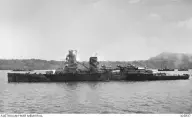
Java Sea — Doorman and the ABDA Squadron
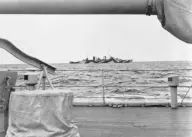
The Last Stand of Perth and Houston
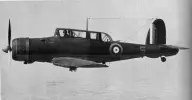
Bergen — the Skuas at extreme range
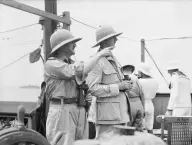
Dakar — de Gaulle and Operation Menace
March 1943 — where to place the escorts?
Mers-el-Kébir
Whitworth and the Warspite — 13 April
Halsey at the Marshalls: Strike or Hold Back?
Convoy HG-76 — the escort under the wolf-pack
Six Swordfish Against the Squadron — the Channel Dash
Java Sea — Doorman and the ABDA Squadron
The Last Stand of Perth and Houston
Bergen — the Skuas at extreme range
Dakar — de Gaulle and Operation Menace
March 1943 — where to place the escorts?
Mers-el-Kébir
Whitworth and the Warspite — 13 April
T10-044