
A Few Days to Settle Everything Before Evacuation
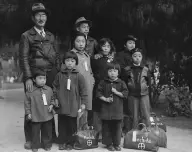
A Japanese American head of household has farmed a truck-garden plot in 's Central Valley for years. Like thousands of his neighbours, he is a U.S. citizen or a long-time resident; his children were born on American soil. Six days earlier, on 19 February 1942, President signed an order authorising the army to designate exclusion zones and to remove from them anyone it deems suspect. On the West Coast, everyone understands who is meant.
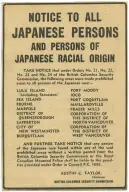
Notices posted in the streets announce the imminent evacuation of persons of Japanese ancestry to centres run by a federal agency, the . The first camp, , opens in the desert a few weeks later. Each family will be allowed only what it can carry; the rest — land, crop, equipment, furniture, savings — must be liquidated within days, under the eyes of buyers who know the seller is desperate. No one knows how long they will be gone, or whether they will return.
The head of household weighs three paths for what took a generation to build: comply with the order and sell off the farm and equipment in a panic to buyers who set their own price; try to challenge in court the legality of removing citizens without trial or charge; or entrust the property to a trusted neighbour, on a handshake, betting on a return that would let him reclaim it all.
California, February 1942, a Japanese American head of household: how can the fate of a farm built over a generation be settled in a few days before leaving for the camps?
With no recourse and under the pressure of deadlines, the vast majority of families complied and sold at a loss or abandoned their property. Nearly 120,000 people of Japanese ancestry were interned, about two-thirds of them U.S. citizens. Material losses were massive: farms, businesses, homes and savings dispersed for a fraction of their value. Many who had entrusted their belongings to neighbours found nothing on their return. The injustice was officially acknowledged decades later: the of 1988 apologised on behalf of the United States and granted redress to the survivors.
Learn more about this event
Related polls
10
The West Coast Under Pressure — Roosevelt and EO 9066
Pacific Coast: Stay or Report to the Assembly Centre?
Before the Tribunal: Conscience Against the Uniform
Darwin: what to tell the nation?
The Circular That Divided Norway's Schools
The Coastal Lights and the U-boats
Blockade and Famine: A Gap for Greece?
Le Chambon-sur-Lignon: Hide Them or Hand Them Over?

A Woman at the War Plant Gate
The First Ration Books: Keeping Shop Under Rationing
The West Coast Under Pressure — Roosevelt and EO 9066
Pacific Coast: Stay or Report to the Assembly Centre?
Before the Tribunal: Conscience Against the Uniform
Darwin: what to tell the nation?
The Circular That Divided Norway's Schools
The Coastal Lights and the U-boats
Blockade and Famine: A Gap for Greece?
Le Chambon-sur-Lignon: Hide Them or Hand Them Over?
A Woman at the War Plant Gate
The First Ration Books: Keeping Shop Under Rationing
T10-092