
Blockade and Famine: A Gap for Greece?
and the British have been receiving damning reports from since the autumn of 1941. Massive requisitioning of foodstuffs by German and Italian occupation forces, combined with the collapse of imports and the Royal Navy blockade maintained across the eastern Mediterranean, has stripped the Greek capital of its food reserves. Every week, thousands of civilians — children, the elderly, workers — are dying of hunger in the streets or in overwhelmed hospitals. The International and several neutral governments are pressing London to authorise the passage of ships carrying wheat.
The Cabinet is divided. Lifting the blockade even partially amounts, according to its opponents, to indirectly feeding the Axis divisions stationed in and weakening the economic weapon that London regards as one of its essential levers of war. Other members argue that allowing a narrow gap under strict supervision would save hundreds of thousands of civilians without providing any real benefit to the enemy war machine.
Churchill and his ministers must decide: authorise a humanitarian gap in the blockade, under supervision, to let wheat through; maintain the full blockade to preserve the economic weapon against the Axis; or demand impossible German guarantees, effectively deferring all relief without taking responsibility for it.
London, 15 January 1942, Winston Churchill and the War Cabinet: should the naval blockade be partially lifted to let food reach a starving Greece?
After fierce debates, London agreed to partially lift the blockade. From 1942 onward, neutral ships — including a Swedish cargo vessel chartered under the aegis of the International — delivered Canadian and Turkish wheat to Greek ports. The aid arrived too late and in quantities too small to halt the catastrophe: the famine of 1941-1944 would kill several hundred thousand people in occupied . It nonetheless ended up saving countless lives and established a landmark precedent for humanitarian relief in enemy-occupied territory.
Learn more about this event
Related polls
10
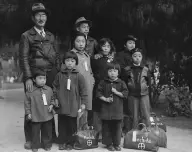
The West Coast Under Pressure — Roosevelt and EO 9066
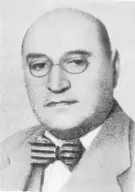
Czerniaków — the offer of the Judenrat
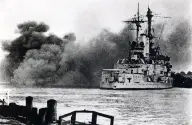
Danzig policeman: serve the annexation?
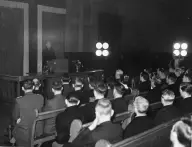
The Circular That Divided Norway's Schools
Women Called to Service
Darwin: what to tell the nation?

Stalin and the Volga Germans
Barred from School in the Warsaw Ghetto
Hilfswillige: Survival or Refusal in the Transit Camp
The Church in a Threatened Moscow
The West Coast Under Pressure — Roosevelt and EO 9066
Czerniaków — the offer of the Judenrat
Danzig policeman: serve the annexation?
The Circular That Divided Norway's Schools
Women Called to Service
Darwin: what to tell the nation?
Stalin and the Volga Germans
Barred from School in the Warsaw Ghetto
Hilfswillige: Survival or Refusal in the Transit Camp
The Church in a Threatened Moscow
T10-060