
Bruneval: The Secret of the Würzburg
Vice-Admiral has headed since December 1941, and the Royal Air Force's mounting losses weigh heavily on him. Night after night, bomber crews return decimated: a new German radar, the , is guiding night fighters and anti-aircraft batteries with unprecedented precision. RAF scientists know neither its frequency nor its scanning method. Aerial reconnaissance has found a lone example perched on the cliff at , a few kilometres north of Le Havre — sitting there, almost within reach, in an occupied country.
Mountbatten weighs 3 courses of action. He can order a handful of paratroopers to drop on under cover of darkness, dismantle the 's key components, take a German technician along if possible, then fall back to the beach where the Royal Navy would lift them out — a bold raid timed to the second. He can instead choose outright destruction: send bombers to level the site, deny the enemy that installation and learn nothing from it. Or he can stand down entirely: judge the risk too great for a company dropped into occupied territory, exposed on a beach battered by the winter Channel.
The stakes go beyond the prestige of . If the raid succeeds, British engineers would finally understand the logic of the and could develop countermeasures capable of saving hundreds of aircrew. If it fails, the enemy would realise its secrets were coveted and harden every radar site along the coast.
Bruneval, 27 February 1942, Chief of Combined Operations: how can Mountbatten unlock the secrets of the Würzburg radar without alerting the enemy or losing the device?
On the night of 27-28 February 1942, Major and his company parachuted onto , seized the 's key components and a German radar operator, then were lifted off by the Royal Navy. The haul allowed Professor and his scientists to decode the radar's workings and develop decisive countermeasures that reduced Bomber Command's losses. became a defining model for raids.
Learn more about this event
Related polls
10
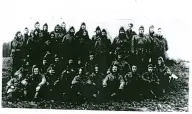
The first jump: a raid with no safety net for the return
The Uxbridge plotter
The Polish Second Bureau in Besieged Warsaw
The Cambridge mathematician sworn to secrecy at Bletchley
Saint-Pierre and Miquelon: Bold Stroke or Prudence?
Sorge in Tokyo: The Net Tightens
Will the RAF change its target?
Baku in the crosshairs — Operation Pike
Malta under the bombs: sacrifice the island vs Rommel?
Intelligence and the Ardennes
The first jump: a raid with no safety net for the return
The Uxbridge plotter
The Polish Second Bureau in Besieged Warsaw
The Cambridge mathematician sworn to secrecy at Bletchley
Saint-Pierre and Miquelon: Bold Stroke or Prudence?
Sorge in Tokyo: The Net Tightens
Will the RAF change its target?
Baku in the crosshairs — Operation Pike
Malta under the bombs: sacrifice the island vs Rommel?
Intelligence and the Ardennes
T10-054