
Hel — Unrug faces the German envoy
, 55, rear admiral, has commanded all Polish naval and coastal-defence forces since 1925. Born in Brandenburg into a family of Germano-Polish minor nobility, an officer of the Kaiserliche Marine from 1914 to 1918, he opted for Poland in 1919. Perfectly bilingual, he had vowed, on becoming a Polish citizen, never again to speak a word of German in public.
The Hel peninsula — a 35 km strip of sand and forest jutting into the Bay of Danzig — has served as the Polish Navy's fortified camp since 1936. It holds 3 heavy batteries (152 mm Bofors, 105 mm Schneider guns and the Laskowski battery with its 4 Danish 152 mm guns), a garrison of 3,000 men, bunkers, depots and a military railway. On 1 September, after the rapid fall of Gdynia — Kępa Oksywska would fall on 14 September — Hel becomes the last Polish foothold on the Baltic.
From 9 September to 2 October the peninsula is pounded by 3 German capital ships taking turns — Schleswig-Holstein, Schlesien and Admiral Hipper — by Stukas of and He 111s of , and by a ground offensive launched along the isthmus by the . By 30 September, after the fall of Warsaw on the 27th and Modlin on the 28th, Hel is the last pocket of resistance. The ammunition will not last more than 4 days. On 1 October, Reichenau sends an envoy.
Hel Peninsula, 1 October 1939, you are Admiral Unrug: what to do when the enemy sends an envoy?
Unrug destroys all installations and heavy weapons, then capitulates. On the evening of 1 October, the Hel batteries fire their last shells against German-held Gdynia to empty the magazines. The guns are blown up with dynamite. The secret codes are burned. On the morning of 2 October, Commander carries the white flag forward. Polish losses: 53 killed, 200 wounded. Unrug and 4,000 defenders (3,000 sailors, 1,000 infantry) go into captivity. In the German oflags, Unrug systematically refuses to speak German in front of Wehrmacht officers — he insists on an interpreter, though everyone knows he has perfect command of the language. His formula: "From 1 September 1939 onward, I have forgotten German." He is freed in 1945, refuses to return to communist Poland, dies in France (Lailly-en-Val) in 1973. His ashes are brought back to Gdynia in 2018, to the Polish naval necropolis.
Learn more about this event
Related polls
10
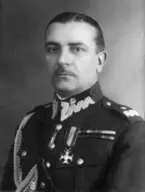
Brześć — Plisowski faces Guderian
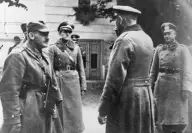
Modlin — Thommée at the last fortress
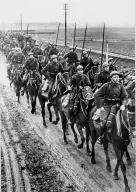
Mokra — Filipowicz and the Volhynian Brigade
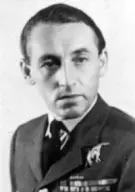
Władysław Gnyś — the Dorniers over Olkusz
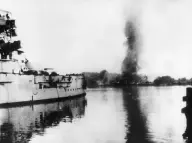
Westerplatte — Sucharski under the Schleswig-Holstein's guns
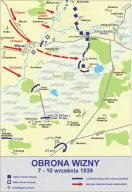
Wizna — Raginis in the Górka bunker
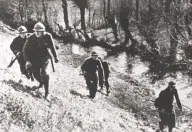
Kock — Kleeberg on the morning of 6 October
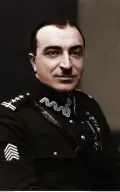
Wytyczno — Orlik-Rückemann after Szack
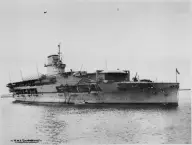
HMS Courageous — Makeig-Jones after the Torpedoes
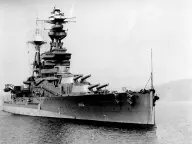
Royal Oak — Prien in Scapa Flow
Brześć — Plisowski faces Guderian
Modlin — Thommée at the last fortress
Mokra — Filipowicz and the Volhynian Brigade
Władysław Gnyś — the Dorniers over Olkusz
Westerplatte — Sucharski under the Schleswig-Holstein's guns
Wizna — Raginis in the Górka bunker
Kock — Kleeberg on the morning of 6 October
Wytyczno — Orlik-Rückemann after Szack
HMS Courageous — Makeig-Jones after the Torpedoes
Royal Oak — Prien in Scapa Flow
T01-014