
Kock — Kleeberg on the morning of 6 October
, 51, has commanded the since March 1939 — a mobile reserve formation in the Polesian marshes on the Soviet frontier. After the German invasion his mission becomes to cover the withdrawal onto the "Romanian bridgehead". But the Soviet invasion of 17 September closes that line of retreat.
From 17 to 30 September, Kleeberg fights a westward withdrawal against Soviet units (2 cavalry brigades, a BT-7 tank brigade) while avoiding the German armoured spearheads to the south. On the way he picks up scattered units: General 's (after the actions of Szack and Wytyczno), remnants of the , fragments of the . By 1 October, his Polesie group numbers around 17,000 men, 2 artillery regiments and some 3,500 horses — the last organised Polish formation still in the field.
He knows Warsaw capitulated on the 28th, Modlin on the 29th, Hel on 2 October. No relief is possible. At Kock (95 km north-east of Lublin) on 2 October, he runs into the leading elements of General 's . Immediate engagement. By 5 October the Poles have beaten 2 German regiments, taken about a hundred prisoners and several guns. But the ammunition is nearly gone.
Kock, October 1939, the last Polish unit in the field: what to decide on the morning of the 6th?
Kleeberg chooses to surrender in good order and negotiate honourable military terms on the morning of 6 October 1939. He signs the surrender at 11:00, after speaking one last time to his officers: "We have done our duty." Polish losses at Kock: 250 dead, 600 wounded. 16,000 prisoners pass into captivity. The military campaign of September 1939 is officially over. Kleeberg is deported into captivity; he dies in April 1941 at the Weissenburg military hospital (Bavaria) of a pulmonary illness, having refused any cooperation with the Germans. His remains are returned to Poland in 1969. His final command post at Kock is today the Museum of the Polesie Group, one of the high places of Polish military memory.
Learn more about this event
Related polls
10
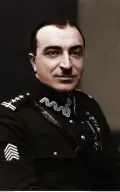
Wytyczno — Orlik-Rückemann after Szack
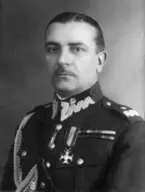
Brześć — Plisowski faces Guderian
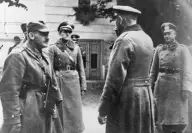
Modlin — Thommée at the last fortress
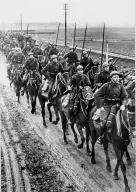
Mokra — Filipowicz and the Volhynian Brigade
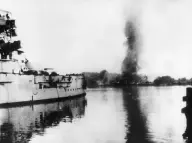
Westerplatte — Sucharski under the Schleswig-Holstein's guns
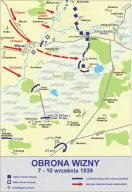
Wizna — Raginis in the Górka bunker
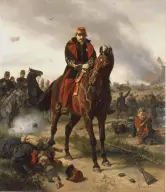
Bulson — Lafontaine and the 02:00 rumour
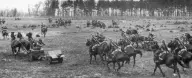
The Bzura — Kutrzeba faces the trap
Calais — Nicholson facing the ultimatum
Eben-Emael — Jottrand under the explosions
Wytyczno — Orlik-Rückemann after Szack
Brześć — Plisowski faces Guderian
Modlin — Thommée at the last fortress
Mokra — Filipowicz and the Volhynian Brigade
Westerplatte — Sucharski under the Schleswig-Holstein's guns
Wizna — Raginis in the Górka bunker
Bulson — Lafontaine and the 02:00 rumour
The Bzura — Kutrzeba faces the trap
Calais — Nicholson facing the ultimatum
Eben-Emael — Jottrand under the explosions
T01-018