Wytyczno — Orlik-Rückemann after Szack
, 45, has commanded since April 1939 the (KOP, Border Protection Corps) — an elite formation of the Polish army dedicated to guarding the eastern frontier (with the USSR), 25,000 men over 1,400 kilometres. Hand-picked officers, anti-guerrilla training, intimate knowledge of the marshland terrain of Polesia.
On 17 September 1939 the Soviet invasion catches the KOP in the front line. A part is at once encircled and taken prisoner. Orlik-Rückemann concentrates the surviving units: the (4 battalions, 7,000 men), an armoured train, 2 cavalry squadrons. He decides to fight while withdrawing westward, hoping to link with Kleeberg in southern Poland.
From 17 to 30 September, forced marches through marshes and forests, repeated clashes with Soviet units startled by the resilience of the KOP. Battle of Szack on 28-29 September: the KOP brigade inflicts substantial losses on the (General ), captures some 50 prisoners, destroys 6 BT-7 tanks — a remarkable tactical balance for a delaying action in numerical inferiority.
On 1 October 1939, near the village of Wytyczno, Orlik-Rückemann engages an advance guard of the (General ). The KOP brigade has held for 2 weeks in a fighting retreat against the , but it is exhausted — ammunition at 20 per cent, men fit to fight at 60 per cent.
Wytyczno, 1 October 1939, you command the encircled Polish KOP: what to do with your exhausted brigade?
Orlik-Rückemann dissolves the brigade into small groups for clandestine passage to Hungary, in the afternoon of 1 October. Each detachment of 100-200 men is ordered to attempt individual passage to the south-west. The NCOs are authorised to surrender their men if passage is impossible. Toll of Wytyczno: 100 Polish dead, 250 Soviet dead, some 600 Polish prisoners (taken in the following days). It is the last tactical battle of the September 1939 campaign against the — the same week as the battle of Kock against the Germans. Orlik-Rückemann himself crosses Hungary in November, reaches France, and then the United Kingdom in June 1940. He commands the defence of Polish Scotland, then serves on the Sikorski staff. He refuses to return to communist Poland. He emigrates to Canada (Toronto), where he dies in 1986. His KOP brigade becomes a symbol: a Polish military elite sacrificed by Soviet recklessness, the majority of the surviving prisoners to be murdered in the spring of 1940 in the Katyn massacre.
Learn more about this event
Related polls
10
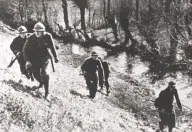
Kock — Kleeberg on the morning of 6 October
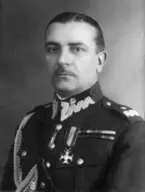
Brześć — Plisowski faces Guderian
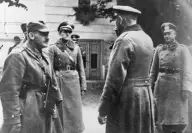
Modlin — Thommée at the last fortress
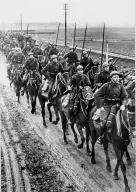
Mokra — Filipowicz and the Volhynian Brigade
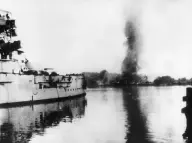
Westerplatte — Sucharski under the Schleswig-Holstein's guns
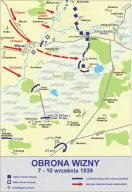
Wizna — Raginis in the Górka bunker
Bulson — Lafontaine and the 02:00 rumour
The Bzura — Kutrzeba faces the trap
Calais — Nicholson facing the ultimatum
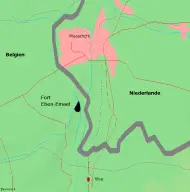
Eben-Emael — Jottrand under the explosions
Kock — Kleeberg on the morning of 6 October
Brześć — Plisowski faces Guderian
Modlin — Thommée at the last fortress
Mokra — Filipowicz and the Volhynian Brigade
Westerplatte — Sucharski under the Schleswig-Holstein's guns
Wizna — Raginis in the Górka bunker
Bulson — Lafontaine and the 02:00 rumour
The Bzura — Kutrzeba faces the trap
Calais — Nicholson facing the ultimatum
Eben-Emael — Jottrand under the explosions
T01-057