
Mokra — Filipowicz and the Volhynian Brigade
, 44, has commanded the () since 1937. Under his orders serve 4 uhlan regiments and a horse-artillery regiment of 7 batteries of 75 mm wz. 02/26 guns, backed by a squadron of TKS light tanks and a cyclist squadron; but his trump card remains the 9 37 mm Bofors wz. 36 anti-tank guns, the most effective anti-tank weapon in the Polish army.
The brigade is positioned within General 's , in the Kłobuck sector. Facing it stands General 's , one of the 5 German armoured divisions, fielding some 340 tanks — Panzer I, II, IV and Czech 35t.
At 06:00 on 1 September, Reinhardt launches his main axis through the gap between Mokra and Wilkowiecko. The Polish cavalry holds a wooded line over 12 km, its 9 anti-tank guns dispersed in ambush. Polish doctrine is plain: no charge — the principal weapon is the anti-tank gun, and the cavalry is only a mounted infantry meant for manoeuvre. At 07:30, the first Panzers emerge into the Mokra clearing. Filipowicz is at his command post, 800 metres from the firing line.
Mokra, 1 September 1939, you are Colonel Filipowicz: how to use your anti-tank guns against the German tanks?
Filipowicz applies B. The Bofors wz. 36 open fire at close range from 08:00. The loses between 50 and 100 tanks and vehicles during the day (German sources: 47 tanks put out of action; Polish sources: 100+) — losses without precedent for the Wehrmacht in 1939. Reinhardt is forced to commit his reserves and to call in aircraft to bomb Mokra. The loses about 500 men killed and wounded, and half of its horses. By evening, Filipowicz disengages in good order toward the Warta line. The battle of Mokra demonstrates the tactical effectiveness of the well-handled anti-tank gun and partly dismantles the (German and later Soviet) post-war myth that Polish cavalry had "charged the tanks with sabres". Reinhardt will note in his diary: "Another day like this one and the division will cease to exist." Filipowicz survives the campaign, joins the Resistance, is wounded in 1944, and dies in Cracow in July 1945.
Learn more about this event
Related polls
10
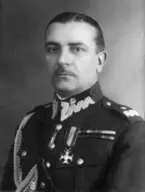
Brześć — Plisowski faces Guderian
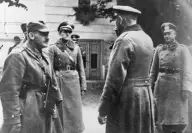
Modlin — Thommée at the last fortress
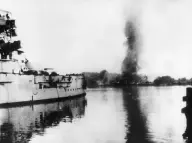
Westerplatte — Sucharski under the Schleswig-Holstein's guns
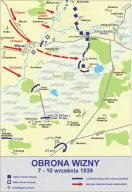
Wizna — Raginis in the Górka bunker
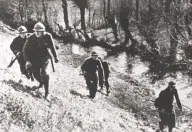
Kock — Kleeberg on the morning of 6 October
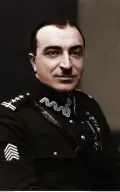
Wytyczno — Orlik-Rückemann after Szack
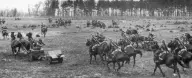
The Bzura — Kutrzeba faces the trap
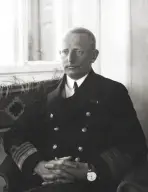
Hel — Unrug faces the German envoy
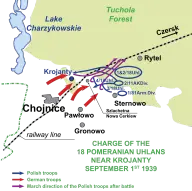
Krojanty — Mastalerz and the 18th Uhlans
Lwów — Langner between 2 occupiers
Brześć — Plisowski faces Guderian
Modlin — Thommée at the last fortress
Westerplatte — Sucharski under the Schleswig-Holstein's guns
Wizna — Raginis in the Górka bunker
Kock — Kleeberg on the morning of 6 October
Wytyczno — Orlik-Rückemann after Szack
The Bzura — Kutrzeba faces the trap
Hel — Unrug faces the German envoy
Krojanty — Mastalerz and the 18th Uhlans
Lwów — Langner between 2 occupiers
T01-010