
The Polish Post Office in Danzig — Guderski under SS fire
The Polish Post Office in Danzig is one of 3 Polish institutions that the Treaty of Versailles authorises in the Free City of Danzig (a status held since 1920). 56 employees work there, all of them Polish citizens. Since May 1939, the authorities in Warsaw have quietly infiltrated 8 reserve officers, among them , a 39-year-old engineer lieutenant posing as a postal clerk. The building is officially civilian, but weapons — Vis wz.35 pistols, grenades, Browning wz.28 light machine guns, 2 light machine guns — have been hidden inside since July.
The official director is ; is his deputy. Guderski commands the defence clandestinely. 56 men in all: career postal workers, labourers, a handful of veterans of 1920.
At 04:45 on 1 September, as the Schleswig-Holstein opens fire on Westerplatte, the () and the German Schutzpolizei — some 180 men supported by 2 ADGZ armoured cars — attack the Polish Post Office. Their mission: to neutralise this Polish pocket in the heart of the city. Guderski commands the defenders: hold the building, protect the civilians (women and children of the employees inside).
Danzig, 1 September 1939, you defend the besieged Polish Post Office: what to do in the first hours of fighting?
Guderski barricades the building to defend it floor by floor and wait for a relief column. The defence holds for 15 hours. Around noon, Guderski is killed by the explosion of a grenade he has just thrown (according to ). Flisykowski takes effective command. The SS bring up a tanker truck and flood the cellars with petrol; at 17:30 they set the building ablaze with flamethrowers. The surrender comes around 19:00, a white flag waved from a window. The toll: 6 defenders killed in action, about 10 burned alive or killed during the sortie under fire, a handful of escapees. The survivors — 38 postal workers — are condemned to death by a German Sondergericht (special court) on 8 October 1939 as "francs-tireurs" and shot on 5 October 1939 in the ditches of Zaspa airfield. The judgement is overturned in 1995-1998 by Germany's Federal Court of Justice, which recognises that the defenders had the legal right to fight as soldiers of a belligerent state. The names of those shot are today inscribed on a memorial in Gdańsk.
Learn more about this event
Related polls
10
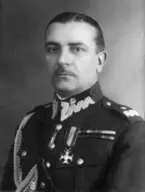
Brześć — Plisowski faces Guderian
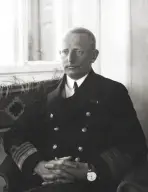
Hel — Unrug faces the German envoy
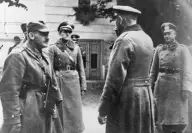
Modlin — Thommée at the last fortress
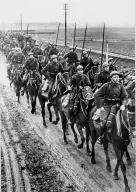
Mokra — Filipowicz and the Volhynian Brigade
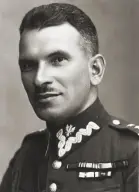
Praga — Rommel facing the siege
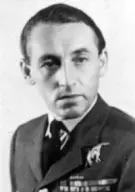
Władysław Gnyś — the Dorniers over Olkusz
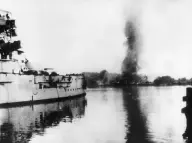
Westerplatte — Sucharski under the Schleswig-Holstein's guns
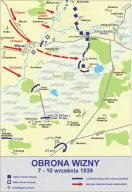
Wizna — Raginis in the Górka bunker
Kock — Kleeberg on the morning of 6 October
Tomaszów Lubelski — Piskor between 2 fronts
Brześć — Plisowski faces Guderian
Hel — Unrug faces the German envoy
Modlin — Thommée at the last fortress
Mokra — Filipowicz and the Volhynian Brigade
Praga — Rommel facing the siege
Władysław Gnyś — the Dorniers over Olkusz
Westerplatte — Sucharski under the Schleswig-Holstein's guns
Wizna — Raginis in the Górka bunker
Kock — Kleeberg on the morning of 6 October
Tomaszów Lubelski — Piskor between 2 fronts
T01-007