
Krojanty — Mastalerz and the 18th Uhlans
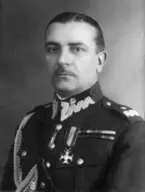
, 45, has commanded the , attached to Colonel 's , since 1935. On the morning of 1 September 1939, his regiment is covering the withdrawal of Polish units south of Chojnice, in the face of the German pushing toward Tuchel.
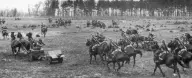
Around 19:00, his scouts spot an infantry battalion of the German bivouacked at the edge of the Krojanty forest. Polish cavalry is mounted infantry — no breastplate, no lance, Mauser wz. 98 rifles and wz. 34 sabres for the officers. But mounted combat formation is still taught: an edged-weapon charge against infantry caught in the open is a recognised tactic.
The ground is open for 800 metres. The German battalion is dismounted, rifles stacked. Mastalerz has 2 squadrons immediately available, some 250 troopers, against 200 foot. But he knows that Sd.Kfz. 222 armoured cars have been reported in the area — cavalry has no answer to their 20 mm. The window of surprise is closing fast.
Krojanty, evening of 1 September 1939, you are Colonel Mastalerz: what to do in the next 20 minutes?
Mastalerz charges at once with the sabre to exploit the surprise. The charge of the 2 squadrons surprises the German infantry, which takes losses and falls back into the woods. But Sd.Kfz. 222 and 231 armoured cars arrive within minutes and open fire on the troopers exposed on the flat ground. Mastalerz is killed, along with some 20 uhlans; about 50 are wounded. The Germans evacuate their position for the night. On 2 September, an Italian war correspondent (, attached to the German unit) files a dispatch claiming that the Polish cavalry has "charged German tanks with sabres" — an erroneous account that becomes the basis of the Nazi (and later Soviet) propaganda myth of "Polish cavalry against the Panzers". The reality of Krojanty is the opposite: a tactically successful charge against infantry, followed by a withdrawal under light armoured fire.
Learn more about this event
Related polls
10
Brześć — Plisowski faces Guderian
The Bzura — Kutrzeba faces the trap
Lwów — Langner between 2 occupiers
Maria Wittek — the PWK in September 1939
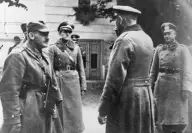
Modlin — Thommée at the last fortress
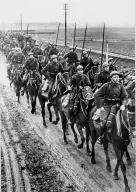
Mokra — Filipowicz and the Volhynian Brigade
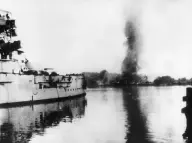
Westerplatte — Sucharski under the Schleswig-Holstein's guns
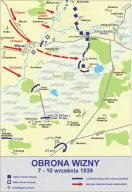
Wizna — Raginis in the Górka bunker
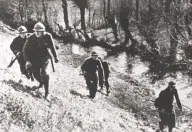
Kock — Kleeberg on the morning of 6 October
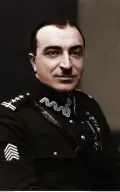
Wytyczno — Orlik-Rückemann after Szack
Brześć — Plisowski faces Guderian
The Bzura — Kutrzeba faces the trap
Lwów — Langner between 2 occupiers
Maria Wittek — the PWK in September 1939
Modlin — Thommée at the last fortress
Mokra — Filipowicz and the Volhynian Brigade
Westerplatte — Sucharski under the Schleswig-Holstein's guns
Wizna — Raginis in the Górka bunker
Kock — Kleeberg on the morning of 6 October
Wytyczno — Orlik-Rückemann after Szack
T01-006