
Wieluń at 04:40 — the first air strike
Wieluń is a town of 16,000 in central Poland, 21 km from the German border. It has no military garrison, no armaments works, no recognised strategic objective. Its centre is dominated by a fourteenth-century Gothic church, a 50-bed hospital whose roof bears a red cross visible from 800 metres up, and a market held every Friday.
On the night of 31 August - 1 September 1939, at the German air base of Nieder-Ellguth (Silesia), 29 Junkers Ju 87 "Stuka" dive-bombers of , under Major , are loaded with bombs. The objective assigned by General 's : to neutralise a supposed "concentration of Polish cavalry" at Wieluń. No cavalry is stationed there.
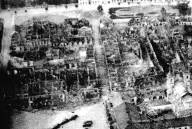
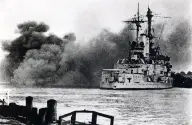
The town is attacked at 04:40 — 5 minutes before the Schleswig-Holstein opens fire at Westerplatte. 29 tonnes of bombs in 3 waves. The hospital is hit in the first wave at 04:42; 32 patients die in their beds. By daybreak, roughly 75% of the town centre lies in ruins. The local Polish authorities — mayor, chief physician, parish priest — must decide within a few hours how to organise what comes next.
Wieluń, 1 September 1939, authorities of a defenceless bombed town: how to react in the first hours?
The local authorities concentrate their efforts on the wounded by mobilising the survivors, and stay put. Doctor reorganises medical care in the buildings still standing. The human cost of the day is debated today: (Wieluń 1939, 2008) documents 127 identified dead drawn from parish and hospital registers, while not ruling out close to double that figure for unrecorded dead (refugees, indigents). The figures traditionally cited (1,200 to 2,000 dead) are not supported by primary sources according to the revisionist research of the 2000s. Wieluń is regarded as the first deliberate bombing of civilians of the Second World War in Europe. The Nuremberg trials do not single out Wieluń specifically. The town is granted official commemorative status only in 2004. No German pilot involved is ever tried.
Learn more about this event
Related polls
10
Wieluń, 4:40 a.m. — the first bomb of the war
Danzig policeman: serve the annexation?
Czerniaków — the offer of the Judenrat
The Jewish Schoolteacher of Kazimierz
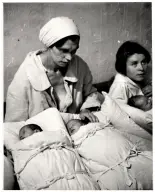
Besieged Warsaw — a Hospital Short of Everything
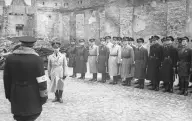
Czerniaków — the Warsaw ghetto sealed
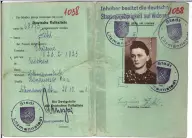
The Deutsche Volksliste — sign, or stay Polish
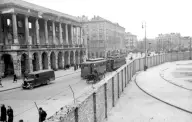
Barred from School in the Warsaw Ghetto
Warsaw Ghetto Teachers and the Ban
The Warsaw Ghetto — the temptation of informing
Wieluń, 4:40 a.m. — the first bomb of the war
Danzig policeman: serve the annexation?
Czerniaków — the offer of the Judenrat
The Jewish Schoolteacher of Kazimierz
Besieged Warsaw — a Hospital Short of Everything
Czerniaków — the Warsaw ghetto sealed
The Deutsche Volksliste — sign, or stay Polish
Barred from School in the Warsaw Ghetto
Warsaw Ghetto Teachers and the Ban
The Warsaw Ghetto — the temptation of informing
T01-002