
Wizna — Raginis in the Górka bunker
, 31, a captain of the (KOP, Border Protection Corps), has commanded the fortified sector of Wizna — 9 km north-east of Łomża — since April 1939. The sector rests on 8 reinforced-concrete bunkers thrown up between July and August 1939, some still unfinished, their machine-gun casemates not even mounted. To hold them Raginis has only 720 men; his armament amounts to 2 wz.30 heavy machine guns, 6 37 mm wz.36 anti-tank guns and 2 76 mm wz.02/26 infantry guns.
Facing him, from 7 September, comes General 's : 3 divisions — the , the and the in reserve — some 42,000 men and 350 tanks. Guderian's mission is to cross the Narew, reach Brest-Litovsk and close the pincers around the Polish armies.
On the morning of the 7th, Raginis has made his officers swear they will hold the position "to the death". The first German tanks appear on the morning of the 8th. For 3 days the Polish positions hold under a torrent of fire. Around 11:00 on 10 September, 6 of the 8 bunkers are knocked out; only Giełczyn and Górka — where Raginis himself commands — still hold. He has 5 officers and 60 fit men left, and the ammunition is running out, when the Germans offer surrender over loudspeakers.
Wizna, September 1939, you are Captain Raginis: what to answer to the German surrender offer?
Raginis orders the soldiers to surrender but refuses for himself alone. He orders the surviving soldiers out to surrender, refusing for himself out of fidelity to his oath. Around 13:00, after his men have left, he blows himself up with a grenade in the Górka bunker. Lieutenant , the other officer who had sworn the oath with him, dies in combat a little earlier. The defence of Wizna had held for 3 days against forces in a ratio of 60 to 1 (men) and 350 to 0 (tanks) — delaying Guderian's link-up with the northern group by some 48 hours, though without altering the strategic outcome of the campaign. The position becomes the "Polish Thermopylae" in post-war collective memory. Raginis is interred in 2011 in a memorial necropolis at Wizna, his remains having been identified by DNA.
Learn more about this event
Related polls
10
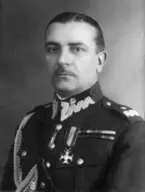
Brześć — Plisowski faces Guderian
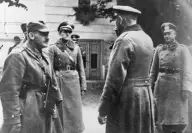
Modlin — Thommée at the last fortress
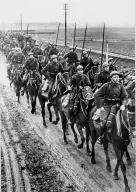
Mokra — Filipowicz and the Volhynian Brigade
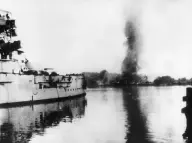
Westerplatte — Sucharski under the Schleswig-Holstein's guns
Kock — Kleeberg on the morning of 6 October
Wytyczno — Orlik-Rückemann after Szack
The Bzura — Kutrzeba faces the trap
Hel — Unrug faces the German envoy
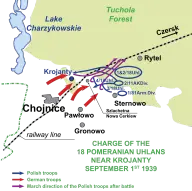
Krojanty — Mastalerz and the 18th Uhlans
Lwów — Langner between 2 occupiers
Brześć — Plisowski faces Guderian
Modlin — Thommée at the last fortress
Mokra — Filipowicz and the Volhynian Brigade
Westerplatte — Sucharski under the Schleswig-Holstein's guns
Kock — Kleeberg on the morning of 6 October
Wytyczno — Orlik-Rückemann after Szack
The Bzura — Kutrzeba faces the trap
Hel — Unrug faces the German envoy
Krojanty — Mastalerz and the 18th Uhlans
Lwów — Langner between 2 occupiers
T01-003