
Rydz-Śmigły at Kuty — the directive of 17 September
, 53, has been commander-in-chief of the Polish armed forces (Generalny Inspektor Sił Zbrojnych) since May 1935 and the principal political heir of the colonels' regime. On 17 September 1939, 17 days after the German invasion, he is installed at Kuty, a small town in Galicia 5 km from the Romanian border, where the Polish government has been falling back since the 14th.
The western Polish armies have been crushed (the battle of the Bzura is entering its final phase); Warsaw is besieged but holds; Modlin, Lwów and Hel still resist. The official withdrawal plan — the "Romanian bridgehead" — aims to concentrate the residual forces in the south-east and receive French supplies through allied Romania.
At 03:00 on the 17th, the Polish consul in Moscow, , is summoned to the Kremlin: hands him a note — since the Polish state has "ceased to exist", the is intervening to "protect the Belarusian and Ukrainian populations". 6 Soviet armies (about 600,000 men) cross the border at 04:00 without any formal declaration of war. At Kuty, Rydz-Śmigły learns the news around 06:00. He has only a few hours to issue his last orders before crossing into Romania.
Romanian border, 17 September 1939, you are Marshal Rydz-Śmigły: what order to give as the Red Army advances?
Rydz-Śmigły chooses not to engage the Soviets and to fall back toward the Romanian or Hungarian border. His directive of the morning of 17 September (transmitted by fragmentary radio): "With the Soviets, do not fight, except in case of attack or attempted disarmament." The order is meant to avoid a hopeless 2-front war and preserve forces to rebuild a Polish army abroad. The outcome is ambiguous: some units (the , the defenders of Grodno, General Orlik-Rückemann's ) fight the Soviets anyway. Roughly 250,000 Polish soldiers are captured by the in the following 10 days. Some 22,000 officers, policemen and officials will be murdered in the spring of 1940 at Katyn, Kalinin and Kharkov. Rydz-Śmigły crosses into Romania during the night of 17-18 September and is interned. He returns clandestinely to Poland in 1941 and dies in Warsaw in December 1941. His decision of 17 September remains contested in Polish historiography — accused of having hastened the captivity of the military elite.
Learn more about this event
Related polls
10
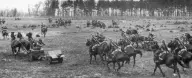
The Bzura — Kutrzeba faces the trap
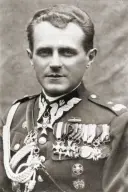
Karaszewicz-Tokarzewski — Founding the SZP
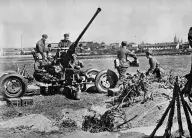
Lwów — Langner between 2 occupiers

Borakowski and the merchant fleet
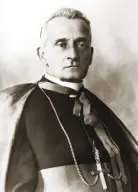
Cardinal Sapieha — Krakow under Occupation
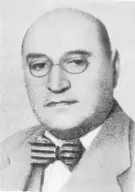
Czerniaków — the offer of the Judenrat
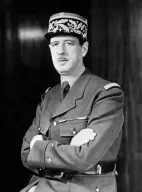
De Gaulle calls on Churchill — 9 June
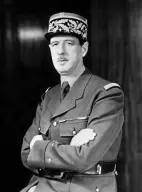
De Gaulle joins the government — 5 June
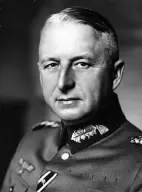
Manstein at Liegnitz — the October memorandum
Operation Peking — Stankiewicz Facing the Sound
The Bzura — Kutrzeba faces the trap
Karaszewicz-Tokarzewski — Founding the SZP
Lwów — Langner between 2 occupiers
Borakowski and the merchant fleet
Cardinal Sapieha — Krakow under Occupation
Czerniaków — the offer of the Judenrat
De Gaulle calls on Churchill — 9 June
De Gaulle joins the government — 5 June
Manstein at Liegnitz — the October memorandum
Operation Peking — Stankiewicz Facing the Sound
T01-004