Tokyo, 5 November 1941: the last council
Admiral had headed the Naval General Staff of the Imperial Japanese Navy since April 1941, and within the high command he carried the fleet's voice in the decisive arbitrations of the autumn. Trained in classical naval doctrine, he grasped the stakes better than most: the American oil embargo was strangling reserves estimated at roughly 2 years' consumption, and every passing month ate into the margin.
The imperial conference of 6 September had already set a timetable; it had lapsed without result. In Washington, the talks led by Ambassador with Secretary of State stalled on a point nothing could untangle: the evacuation of China, demanded by the United States.
For the high command, time now worked against Japan. The season favorable to operations in the Pacific was closing, and diplomacy and the military clock were running in opposite directions.
On 5 November, Emperor presided over the gozen kaigi ("conference in the imperial presence"). The document submitted tied the opening of hostilities to the failure of the talks before a fixed deadline. Nagano had to choose the fleet's line: to prolong the negotiations with no ultimatum or attack timetable; to yield to the American conditions, including withdrawal from China; or to back entry into war with a deadline should no agreement be signed by the end of November.
Tokyo, imperial conference of 5 November 1941, you are Admiral Nagano: what position to defend on the diplomatic talks?
backed the march to war with a deadline: the conference of 5 November 1941 adopted the "Guidelines for Implementing National Policy", setting the march to war while granting diplomacy one last delay, around 30 November. 2 offers, Proposals A and B, were authorized as final concessions; Nomura presented the first on 6 November and the second on 20 November. The Hull note of 26 November, reaffirming the evacuation of China, was perceived in Tokyo as a rejection. The imperial conference of 1 December ratified the war. The attack fleet was already sailing toward Hawaii; the assault on Pearl Harbor took place on 7 December. The timetable decided on 5 November locked in the sequence: failing an agreement before the deadline, the military decision applied almost automatically, narrowing the negotiators' margin right up to the outbreak.
Learn more about this event
Related polls
10
Japan and the Southern Resource Zone
Tokyo and the Lure of Southern Indochina
Tokyo and the Axis Alliance Offer
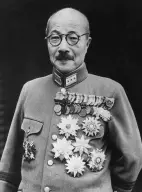
Tojo as Prime Minister: Reopening the Question of War
Hitler After Molotov — Berlin, November 1940
Hitler Before His Generals
Hitler — the Eve of Barbarossa
Hitler — the Reichstag Speech
Hitler Faces Allied Resolve
Molotov in Berlin — November 12
Japan and the Southern Resource Zone
Tokyo and the Lure of Southern Indochina
Tokyo and the Axis Alliance Offer
Tojo as Prime Minister: Reopening the Question of War
Hitler After Molotov — Berlin, November 1940
Hitler Before His Generals
Hitler — the Eve of Barbarossa
Hitler — the Reichstag Speech
Hitler Faces Allied Resolve
Molotov in Berlin — November 12
T09-070