
The Altmark affair
In February 1940, a German supply ship, the Altmark, was bringing back to Germany, through the coastal waters of neutral Norway, nearly 300 British prisoners captured by the battleship Graf Spee. Spotted, it took refuge in a Norwegian fjord, under the theoretical protection of Oslo's neutrality, which Norwegian ships were enforcing.
The commander of the destroyer HMS Cossack had to decide. To board the Altmark in Norwegian waters to free the prisoners, violating Norway's neutrality and risking a diplomatic incident. To respect Norwegian neutrality and let the ship slip away with its prisoners. Or to block the Altmark without boarding it, while awaiting instructions.
The stakes went beyond the fate of the prisoners: it was the question of respect for neutral waters in time of war, and the risk of precipitating a crisis in Scandinavia — a region the British and the Germans already coveted (Swedish iron, Narvik). , at the Admiralty, was following the affair closely.
Neutral Norwegian waters, February 1940, you command HMS Cossack facing the Altmark: how far should you go for the prisoners?
On 's instructions, the Cossack carried out A: on 16 February 1940, it boarded the Altmark in the Jøssingfjord and freed nearly 300 British prisoners to cries of "The Navy's here!". The operation, popular in the United Kingdom, openly violated Norwegian neutrality and demonstrated that neither the British nor the Germans would respect it for long. The Altmark affair accelerated the German decision to invade Norway (Weserübung, April 1940) to remove it from Allied influence and secure the iron route. This naval incident of the Phoney War, seemingly minor, was one of the triggers of the Norwegian campaign and illustrates the fragility of neutralities in a total war.
Learn more about this event
Related polls
10

Odderoya — an identity in the mist
Oscarsborg — the intruder in the Oslofjord
Whitworth and the Warspite — 13 April
HMS Daring in the Pentland Firth
Narvik Taken — the War Cabinet's Dilemma
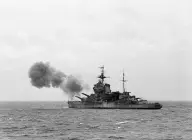
Narvik — too senior an admiral
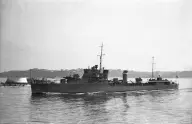
HMS Exmouth in the Moray Firth

Borakowski and the merchant fleet
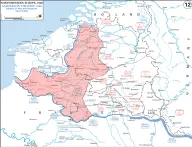
Boulogne — Fox-Pitt and the Guards facing the port
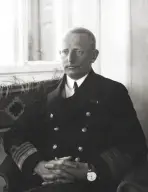
Hel — Unrug faces the German envoy
Odderoya — an identity in the mist
Oscarsborg — the intruder in the Oslofjord
Whitworth and the Warspite — 13 April
HMS Daring in the Pentland Firth
Narvik Taken — the War Cabinet's Dilemma
Narvik — too senior an admiral
HMS Exmouth in the Moray Firth
Borakowski and the merchant fleet
Boulogne — Fox-Pitt and the Guards facing the port
Hel — Unrug faces the German envoy
T02-089