
Bełżec: The Construction Site You Could Guess
lives in the town of Bełżec, on the railway line linking Lublin to Lwów, in the southeast of occupied Poland. In early November 1941, SS men arrive and demand about twenty men from the village for construction work. Kozak is one of them. From 1 November, on a plot running alongside a railway siding, he puts up wooden barracks: a long hall, 50 metres, beside the ramp; another where new arrivals will be sent for a supposed bath; a third partitioned into compartments.
The work is directed by an SS engineer, , and watched by guards. Over the winter, the Polish workers realise that what they are raising has neither the shape of a labour camp nor that of a barracks. The ramps lead nowhere; the piping, the sealed compartments, the very layout of the buildings sketch out a function that no sign names. Soon the Poles are dismissed and replaced by forced Jewish labourers; but Kozak and his neighbours, scattered through the town, have watched the installation go up and can guess what it will serve for once the convoys begin to arrive.
In this February of 1942 the installation is nearly finished and rumour spreads through the surrounding farms. Kozak can try to pass what he knows to the Polish underground, the Home Army, at the risk of being denounced and shot; stay silent and let nothing show, like so many others paralysed by fear of reprisals; or attempt some lone act — a sabotage, a warning to those in danger — that would mark him at once to the SS.
Bełżec, February 1942, a Polish worker conscripted on the site: what should be done with what he understood while building the barracks?
The knowledge of the people of Bełżec did not stay silent: the Polish underground gathered intelligence on the camp very early, and it was the investigation of the clandestine state that helped reveal its nature to the world. himself survived the war and testified in court on 14 October 1945, describing in detail the construction of the first gassing barracks — one of the few first-hand accounts of the camp's building. Bełżec, the first killing centre of Operation Reinhard, operated from March to December 1942: between 430,000 and 500,000 Jews were murdered there with gas, deported from southern occupied Poland. The secrecy was almost total: out of hundreds of thousands of victims, only seven Sonderkommando prisoners survived, and the only published account by a survivor is that of Rudolf Reder.
Learn more about this event
Related polls
10
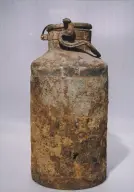
Oneg Shabbat: What to Do With the Ghetto's Memory?
Barred from School in the Warsaw Ghetto
Warsaw Ghetto Teachers and the Ban
A Polish Priest and the Gestapo
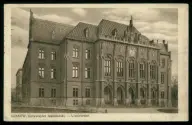
The Kraków Student After the Sonderaktion Krakau
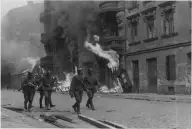
The Jewish Schoolteacher of Kazimierz
The University of Warsaw under the Bombs
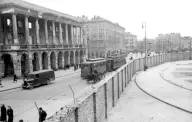
The Warsaw Ghetto — the temptation of informing
The Volksdeutscher and the Selbstschutz Call
Maciej Rataj — Filtrowa Street, 28 November
Oneg Shabbat: What to Do With the Ghetto's Memory?
Barred from School in the Warsaw Ghetto
Warsaw Ghetto Teachers and the Ban
A Polish Priest and the Gestapo
The Kraków Student After the Sonderaktion Krakau
The Jewish Schoolteacher of Kazimierz
The University of Warsaw under the Bombs
The Warsaw Ghetto — the temptation of informing
The Volksdeutscher and the Selbstschutz Call
Maciej Rataj — Filtrowa Street, 28 November
T10-068