
Oneg Shabbat: What to Do With the Ghetto's Memory?
has been leading a secret network for several months — one he named , after the Sabbath day when its members gather. In the streets and cellars of the , dozens of collaborators collect diaries, testimonies, statistics, posters, children's drawings, and correspondence. The aim is to document with rigour what the 450,000 Jews imprisoned behind the walls are enduring.
In early 1942, the first reports of mass killings carried out to the east begin filtering into the ghetto. Ringelblum knows, or suspects, that systematic destruction is approaching. The accumulated mass of documents represents an irreplaceable record — but also a mortal danger for anyone who holds or knows of it. If the archives are discovered, the entire network will be destroyed.
Ringelblum must decide what becomes of this collective memory: intensify the collection effort and bury the documents in milk cans and metal boxes beneath the ghetto's buildings, so that they survive where the people who wrote them may not; abandon the clandestine work, since its discovery would condemn every member of the network; or attempt to smuggle the documents westward, at the risk that the attempt fails and nothing is saved.
Warsaw Ghetto, February 1942, clandestine historian: what should be done with the Oneg Shabbat archives to ensure they outlive their authors?
Ringelblum and his network continued collecting and buried the archives in 3 successive caches between 1942 and 1943. Nearly all members of perished during the war; Ringelblum himself was executed in March 1944. After liberation, 2 of the 3 caches were recovered beneath the ruins of the ghetto: thousands of documents — diaries, letters, reports, drawings — that constitute one of the most comprehensive and precious testimonies of the , the victims' voices transmitted beyond their death.
Learn more about this event
Related polls
10
The University of Warsaw under the Bombs
Maciej Rataj — Filtrowa Street, 28 November
Barred from School in the Warsaw Ghetto
Warsaw Ghetto Teachers and the Ban
Cardinal Sapieha — Krakow under Occupation
Czerniaków — the offer of the Judenrat
Hans Frank — the taking of the Wawel
Kamiński and the Biuletyn — 5 November
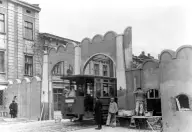
The apothecary of the Kraków Ghetto
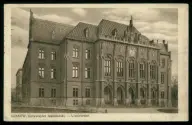
The Kraków Student After the Sonderaktion Krakau
The University of Warsaw under the Bombs
Maciej Rataj — Filtrowa Street, 28 November
Barred from School in the Warsaw Ghetto
Warsaw Ghetto Teachers and the Ban
Cardinal Sapieha — Krakow under Occupation
Czerniaków — the offer of the Judenrat
Hans Frank — the taking of the Wawel
Kamiński and the Biuletyn — 5 November
The apothecary of the Kraków Ghetto
The Kraków Student After the Sonderaktion Krakau
T10-059