
A doctor and the grey form
Our doctor is an established German psychiatrist, in his forties, recruited in the summer of 1940 to serve as a Gutachter, an evaluator, in an operation administered from a villa at Tiergartenstraße 4, in Berlin — an address that will give the programme its code name: 'T4'.
The mechanism was born of a mandate signed by Hitler, back-dated to September 1939, entrusting and the physician with the killing of patients judged 'incurable'. Since the autumn of 1939, questionnaires — the Meldebogen — have been sent to hospitals and psychiatric asylums of the Reich. Presented as a simple statistical census, they focus above all on the patient's capacity to work and on the diagnosis.
The completed forms come back by the thousand. 3 evaluators, each at home, without ever seeing the patient, decide in a black-bordered box: a red plus means death, a blue minus survival. Those marked are transferred by buses to centres such as Brandenburg, where a chamber disguised as a shower, fed with carbon monoxide, has been installed.
The task is presented to our doctor as a clinical act, paid, covered by the Führer's authority. He must answer.
German doctor asked to serve as a T4 programme evaluator, summer 1940: sign or refuse these forms marking patients for extermination?
The historical profile corresponds chiefly to agreeing to serve as an evaluator: nearly all the doctors approached accepted. Some 50 psychiatrists and recognised academics served as evaluators or as centre directors, dispatching the Meldebogen at speed. None was compelled: the few who declined and asked to be kept out of the programme got away without serious reprisal — proof that one could say no. By the count of the official 'Aktion T4', closed in August 1941 after the public sermons of Bishop von Galen: about 70,000 dead, then ~80,000, the programme continuing clandestinely ('14f13') by starvation and injection until 1945, for an estimated total of 250,000–300,000 victims. The gas chambers and T4 personnel later served as a technical template for the extermination centres of 'Aktion Reinhard'.
POINT OF VIGILANCE — [Historiographical note: extremely sober poll. No reconstruction of the victims' feelings (rule 14). The dilemma bears on the perpetrator-doctor's decision and the real freedom to refuse, documented at the trials. Figures in ranges, sources from both historiographies.]
Learn more about this event
Related polls
10
The Madagascar Plan on paper
Himmler's memorandum to the Führer
The torpedo boat and the lit Meknes
The Obersalzberg Speech
Flee or Stay
The Reich and the Resources of the Conquered East
Hitler at the Reichstag: how harsh an antisemitic tone?
The Kindertransport
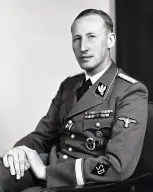
Heydrich's mandate
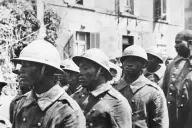
Chasselay — the captured tirailleurs
The Madagascar Plan on paper
Himmler's memorandum to the Führer
The torpedo boat and the lit Meknes
The Obersalzberg Speech
Flee or Stay
The Reich and the Resources of the Conquered East
Hitler at the Reichstag: how harsh an antisemitic tone?
The Kindertransport
Heydrich's mandate
Chasselay — the captured tirailleurs
T04-088