The torpedo boat and the lit Meknes
The commander of a German motor torpedo boat — a Schnellboot designated S-27 — patrols at night in the Channel, off the English coast, on 24 July 1940. These fast craft hunt enemy shipping in the Strait.
Out of the darkness emerges the Meknes, an unarmed French liner. France is no longer at war with Germany: the armistice signed at Rethondes has come into force. The ship is repatriating French navy sailors from Southampton to Marseilles, under a regime supposed to guarantee their safety. Aboard, 1,179 men.
The Meknes makes no attempt to flee. Her French flag is lit by a searchlight, her portholes and her sides are illuminated, her country's name is painted on the hull. The captain even stops the engines and signals in Morse, by lamp, her name and nationality — everything has been done to be identified as a neutral transport under the armistice regime.
The German commander must decide within minutes: is this lit ship signalling its identity a legitimate target, or a transport to let pass?
Commander of a Schnellboot in the Channel, night of 24 July 1940: what to do with this illuminated French liner?
S-27 (commanded by Leutnant ) applies A: around 22:30, she opens fire with machine guns and then launches a torpedo. The Meknes sinks within about 10 minutes off Portland. 383 French sailors perish. The ship, though brilliantly lit and flying a large French flag painted on her sides, had stopped to identify herself. The Vichy government had been informed that Frenchmen were aboard, but the German naval authorities had apparently not been warned. The tragedy, occurring 3 weeks after the British attack at Mers-el-Kebir, deepened French bitterness in a summer when both former allies and an enemy now 'at peace' struck French sailors in turn. The sinking remains one of the lesser-known maritime tragedies of 1940.
Learn more about this event
Related polls
10
Raeder and the Seelöwe gamble
A doctor and the grey form
The Madagascar Plan on paper
A raider, a convoy and a cruiser escort
Weserübung — directive of 1 March
Campioni faces Cunningham off Calabria
An unescorted convoy in the grey morning
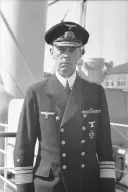
An escort battleship on the convoy's route

Berlin sets the rules of war in the East
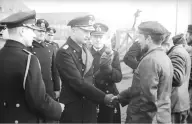
Dönitz at Sengwarden — U-boats Held in Port
Raeder and the Seelöwe gamble
A doctor and the grey form
The Madagascar Plan on paper
A raider, a convoy and a cruiser escort
Weserübung — directive of 1 March
Campioni faces Cunningham off Calabria
An unescorted convoy in the grey morning
An escort battleship on the convoy's route
Berlin sets the rules of war in the East
Dönitz at Sengwarden — U-boats Held in Port
T04-073