Campioni faces Cunningham off Calabria
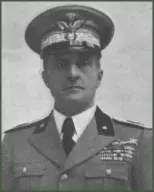
Admiral , 62, commands the battle fleet of the Regia Marina, the Italian royal navy. An experienced officer, he knows his fleet has not yet faced the Royal Navy since Italy entered the war a month earlier. His mission of the day is clear: to cover the return to Taranto of a supply convoy that has sailed to Libya, the Italian colony in North Africa.
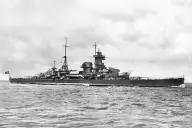
On 9 July 1940, off Punta Stilo, at the tip of Calabria, Campioni has 2 modernised battleships, including the Giulio Cesare, and a large escort of cruisers and destroyers. Facing him appears the British Mediterranean Fleet of Admiral , come from Alexandria: 3 battleships, including the Warspite, and the aircraft carrier Eagle.
The 2 battle lines open fire at very long range. Around 16:00, a Warspite shell strikes the Giulio Cesare at nearly 24 km — one of the longest-range hits ever made between ships. Campioni sees one of his 2 heavy units struck while the Libya convoy is not yet safe. He must decide within minutes.
Admiral Campioni, Regia Marina, Punta Stilo, 9 July 1940: what to do against a superior British fleet?
Campioni breaks off the combat under a smoke screen and withdraws toward the Italian coast: with the Giulio Cesare hit, he breaks his fleet off behind a thick smoke screen and withdraws toward Calabria, under the protection of his shore-based aviation. The Battle of Calabria (or Punta Stilo) remains inconclusive: no battleship is sunk on either side, and the Italian convoy reaches Benghazi safely — Campioni's first objective is met. But the withdrawal leaves Cunningham with a lasting psychological ascendancy. The Royal Navy draws the conviction that it can dominate the central Mediterranean, while Rome adopts a more cautious posture, the fleet in being. Campioni will command for a few more months, then move to territorial duties. Shot in 1944 by the Salo Republic for refusing to serve Mussolini after the 1943 armistice, he will be rehabilitated after the war.
Learn more about this event
Related polls
10
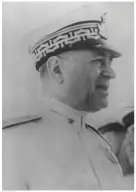
The Regia Marina against Force H — Cape Spartivento
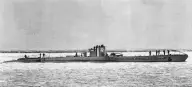
The Giant Adrift off Donegal
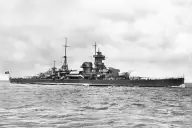
A raider, a convoy and a cruiser escort
An unescorted convoy in the grey morning
Pintor in the Alps — 21 June
U-202 — 14 hours under the hunt
The Dutch hulls on the Rotterdam slipways
Raeder and the Seelöwe gamble
Taranto: The Italian Fleet at Anchor Under the Aerial Threat
The Houx weir
The Regia Marina against Force H — Cape Spartivento
The Giant Adrift off Donegal
A raider, a convoy and a cruiser escort
An unescorted convoy in the grey morning
Pintor in the Alps — 21 June
U-202 — 14 hours under the hunt
The Dutch hulls on the Rotterdam slipways
Raeder and the Seelöwe gamble
Taranto: The Italian Fleet at Anchor Under the Aerial Threat
The Houx weir
T04-078