
Taranto: The Italian Fleet at Anchor Under the Aerial Threat
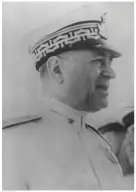
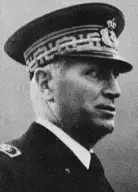
Admiral is the strongman of the Regia Marina: Under-Secretary of State for the Navy and Chief of Staff, he has shaped Italian naval strategy. An advocate of a powerful battleship fleet but of a cautious employment, he long dreaded direct confrontation with the Royal Navy and pleaded to postpone entry into the war.
His doctrine of the "fleet in being" makes the port of Taranto, in Apulia, the pivot of Italian power in the central Mediterranean. It is there, in the roadstead of the Mar Grande, that the bulk of the squadron lies at anchor — 6 battleships concentrated, including the new Littorio and Vittorio Veneto. A massed fleet, ready to pounce on any convoy, but motionless.
Cavagnari has done without the aircraft carrier and has fitted Taranto with no radar. The anchorage is supposed to be protected by 101 anti-aircraft guns, barrage balloons and anti-torpedo nets. But a storm on 6 November carried away 60 balloons, and a gunnery exercise has caused most of the nets to be withdrawn.
On 11 November 1940, a British reconnaissance aircraft flies over the roadstead. The Italians know that an air-sea threat is prowling, but without radar, they can only wait.
Taranto, 11 November 1940, at the head of the Regia Marina: how to protect the battle fleet?
Cavagnari's doctrine kept the fleet moored at Taranto, protected by its anti-aircraft guns and passive defences: the fleet remained concentrated and at anchor at Taranto, faithful to the Italian naval philosophy that proscribed any hazardous sortie. On the night of 11-12 November 1940, the Swordfish of the carrier Illustrious struck. The incomplete nets did not reach down to the bottom; the torpedoes passed beneath them. 3 battleships — Littorio, Conte di Cavour and Caio Duilio — were gravely damaged; half the battle fleet was out of action for months. The blow, delivered by a handful of aircraft, upended naval thinking worldwide and would inspire the Japanese planners of Pearl Harbor. Cavagnari, already criticised after Punta Stilo, was sacked soon after and replaced by Admiral .
Learn more about this event
Related polls
10
The Regia Marina against Force H — Cape Spartivento
Hold the bastion or save the divisions?
U-202 — 14 hours under the hunt
Campioni faces Cunningham off Calabria
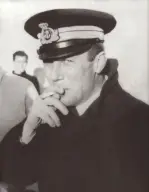
Decima MAS: Where to Strike After Alexandria?
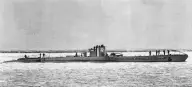
The Giant Adrift off Donegal
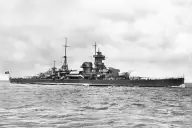
A raider, a convoy and a cruiser escort
Battleships Stuck in Port for Want of Fuel — Central Mediterranean

Boisson Faces the Squadron — Dakar, 23 September 1940
Boulogne — Fox-Pitt and the Guards facing the port
The Regia Marina against Force H — Cape Spartivento
Hold the bastion or save the divisions?
U-202 — 14 hours under the hunt
Campioni faces Cunningham off Calabria
Decima MAS: Where to Strike After Alexandria?
The Giant Adrift off Donegal
A raider, a convoy and a cruiser escort
Battleships Stuck in Port for Want of Fuel — Central Mediterranean
Boisson Faces the Squadron — Dakar, 23 September 1940
Boulogne — Fox-Pitt and the Guards facing the port
T05-040