
Feeding Her Children in the Paris Winter of 1942
A Parisian mother queues at dawn outside the shops of her neighbourhood, her and coupons in hand. In this winter of 1941-1942, the official rations have fallen very low: bread is measured out, butter and fats have all but vanished from the shelves, and meat arrives only in trickles. Her children are hungry, and the coupons handed out each month no longer cover a household's needs.
In occupied , regular provisioning no longer depends on coupons alone. A black market has sprung up everywhere, where almost anything can be found — butter, eggs, meat — but at prices far above the official rates, and in defiance of the law. In the countryside, farmers agree to trade food for linen, jewellery, or household goods; Parisians take the train, suitcase in hand, for the family "provisioning run" that has become a ritual. Everywhere, the "," the art of getting by, makes up for what the administration no longer supplies.
The mother must decide how to fill her children's plates: turn to the black market despite its ruinous cost and illegality, to find what is missing; stick strictly to the ration coupons, at the risk of seeing her children slide toward malnutrition; or set off to barter in the countryside, trading linen and household goods for food, at the price of long, uncertain journeys.
Occupied Paris, February 1942, a mother of a family: how to feed her children when the ration card is no longer enough?
In , the winter of 1941-1942 marked one of the harshest troughs of rationing: an adult's official ration fell below 1,200 calories a day, far short of need, and some categories fared worse still. Faced with this scarcity, getting by became universal. Recourse to the black market and direct "provisioning runs" to the countryside spread across every social class, but the prohibitive prices opened deep inequalities: poorer families, with no connections and nothing to trade, were the most exposed. Malnutrition advanced, especially among children and the elderly, whose growth and health suffered lasting harm. For millions of Parisians, daily life under the Occupation came down to this exhausting hunt for food, between queues, coupons, illegality, and the .
Learn more about this event
Related polls
10
Le Chambon-sur-Lignon: Hide Them or Hand Them Over?

The Parisian concierge facing informing under the Occupation
The Village and the Men of the Woods
A French nurse facing a wounded enemy soldier
At the Warsaw Ghetto Wall, the Winter of Hunger
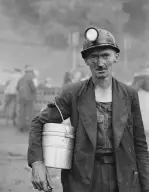
At the Dahomey pit, the morning of team-rate pay
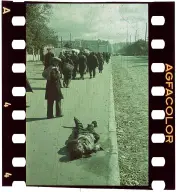
Occupied Kyiv: A Knock at the Door
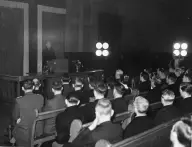
The Circular That Divided Norway's Schools
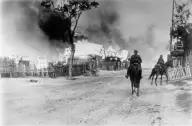
Before the enemy: the kolkhoz farm
Barred from School in the Warsaw Ghetto
Le Chambon-sur-Lignon: Hide Them or Hand Them Over?
The Parisian concierge facing informing under the Occupation
The Village and the Men of the Woods
A French nurse facing a wounded enemy soldier
At the Warsaw Ghetto Wall, the Winter of Hunger
At the Dahomey pit, the morning of team-rate pay
Occupied Kyiv: A Knock at the Door
The Circular That Divided Norway's Schools
Before the enemy: the kolkhoz farm
Barred from School in the Warsaw Ghetto
T10-100