
The Village and the Men of the Woods
A peasant from a village in the Bryansk region, between the great forests and the road to Smolensk, has lived under German military administration since the autumn of 1941. The armies of Army Group Centre overran the region, but the front has moved east and the occupier holds firmly only the towns and the main roads; the countryside and the woods largely escape its control.
In these forests have gathered soldiers who escaped the encirclements of the autumn, fugitives, and Party cadres left behind. The Soviet winter counter-offensive before Moscow has revived their hope and swelled their ranks. Poorly armed and poorly fed, these partisan detachments depend on the villages to live: they expect food, a roof for the night, intelligence on German movements. One night, a few of them appear in the peasant's yard and demand his help.
The occupier, for its part, treats any aid to the partisans as an act of war and strikes the villages with collective reprisals. The peasant must choose quickly: shelter and supply the men of the woods, knowing what the occupier inflicts on suspected villages; refuse them to avoid exposing his family, at the risk of being treated as an enemy by the partisans themselves; or quietly warn the Germans, in the hope of sparing the village.
Bryansk region, February 1942, a peasant in an occupied village: how to act when the partisans knock at the door?
Across the Bryansk and Smolensk regions, many villagers ended up helping the partisans — out of conviction, out of kinship with the fighters, or because refusal exposed them to reprisals from both sides. Carried by the winter counter-offensive and by Soviet airdrops of weapons, the partisan movement grew rapidly in 1942: by the summer, the detachments controlled vast forest zones and hundreds of thousands of inhabitants behind the German lines. The occupier responded with an anti-partisan war of extreme brutality. Under the guise of fighting the bands, the , the SS, and auxiliary forces such as the burned entire villages, shot or deported their inhabitants, took and executed hostages according to quotas fixed in advance — partisans and non-partisans alike. Caught between the demands of the men of the woods and German terror, the civilians of the occupied countryside paid the heaviest price of this war within the war, in hundreds of thousands of dead.
Learn more about this event
Related polls
10

Feeding Her Children in the Paris Winter of 1942
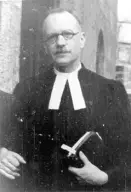
Le Chambon-sur-Lignon: Hide Them or Hand Them Over?
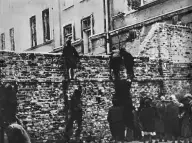
At the Warsaw Ghetto Wall, the Winter of Hunger
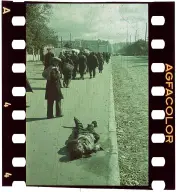
Occupied Kyiv: A Knock at the Door
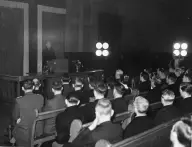
The Circular That Divided Norway's Schools
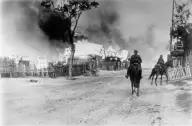
Before the enemy: the kolkhoz farm
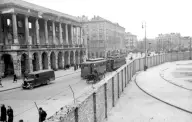
Barred from School in the Warsaw Ghetto
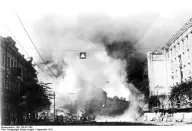
Kiev, September 1941: A Neighbor Facing Babi Yar
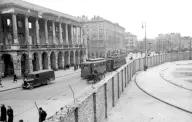
Warsaw Ghetto Teachers and the Ban
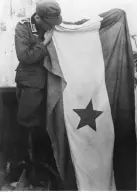
The Belgrade medical student and the call of the Partisans
Feeding Her Children in the Paris Winter of 1942
Le Chambon-sur-Lignon: Hide Them or Hand Them Over?
At the Warsaw Ghetto Wall, the Winter of Hunger
Occupied Kyiv: A Knock at the Door
The Circular That Divided Norway's Schools
Before the enemy: the kolkhoz farm
Barred from School in the Warsaw Ghetto
Kiev, September 1941: A Neighbor Facing Babi Yar
Warsaw Ghetto Teachers and the Ban
The Belgrade medical student and the call of the Partisans
T10-087