
Ambon: Gull Force Driven to the Sea
has commanded for barely three weeks. An Australian lieutenant-colonel, he took charge of the contingent on 14 January 1942, replacing , who had been removed for judging the position indefensible and demanding reinforcements. Scott thus inherits a garrison he hardly knows, scattered across an island he is only beginning to learn.
Around a thousand Australians and several hundred Dutch troops hold the island of , in the Moluccas, around airfield and the bay. On 30 January, Japanese forces land in strength. Within days, air and naval power overwhelm the defenders; communications break down, units find themselves isolated and short of ammunition. The Dutch lay down their arms first, and the enemy pincer closes on the Australian positions falling back toward the coast.
On the morning of 3 February, Scott must decide for what remains of . He can surrender to spare lives in a position that has become untenable; attempt a breakout through the island's mountainous interior; or disperse his men into small groups to wage guerrilla war in the jungle.
Ambon, February 1942, the Australian lieutenant-colonel commanding Gull Force: what to do with a garrison driven back to the sea?
surrendered the Australian garrison on 3 February 1942; nearly 800 surviving Australians became prisoners. The surrender did not end the killing: over about a fortnight, Japanese sailors selected more than 300 Australian and Dutch prisoners at random and executed them — by bayonet, club or sword — near airfield, in four successive massacres, partly in revenge for a sunken minesweeper. Scott himself died in captivity. The fate of the prisoners was among the deadliest of the war: three-quarters of the Australians captured died before the conflict ended, and of the 582 who remained on , 405 never returned.
Learn more about this event
Related polls
10
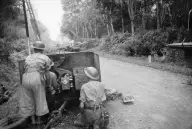
Parit Sulong: The Encircled Column at Dawn
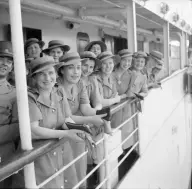
Radji Beach: The Survivors Washed Ashore at Dawn
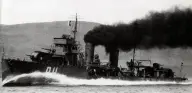
Badung Strait: Striking the Bali Convoy
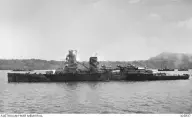
Java Sea — Doorman and the ABDA Squadron
The Last Stand of Perth and Houston
Percival and Yamashita's Ultimatum
The Polish Post Office in Danzig — Guderski under SS fire
Rotterdam — 100 He 111s over the city
Hong Kong's Christmas — Maltby and the Surrender
Slim River: Hold or Break?
Parit Sulong: The Encircled Column at Dawn
Radji Beach: The Survivors Washed Ashore at Dawn
Badung Strait: Striking the Bali Convoy
Java Sea — Doorman and the ABDA Squadron
The Last Stand of Perth and Houston
Percival and Yamashita's Ultimatum
The Polish Post Office in Danzig — Guderski under SS fire
Rotterdam — 100 He 111s over the city
Hong Kong's Christmas — Maltby and the Surrender
Slim River: Hold or Break?
T10-077