
Parit Sulong: The Encircled Column at Dawn
has spent four days commanding the remnants of an Australian-Indian force ground down on the road. When the headquarters of the is bombed on 19 January, it is he who takes charge of the column. A methodical officer, he has already cleared several roadblocks at bayonet point to bring his men back toward the British lines at Yong Peng.
At first light on 21 January, the column reaches the outskirts of the village of . But the bridge over the river, the only way out to the rear, is already held by the Japanese. Anderson retakes the village, yet never manages to dislodge the enemy from the bridge. The Imperial Guards Division, ten times his strength, tightens the noose. The wounded pile up by the hundreds, with no food and no chance of evacuation; aircraft and artillery pound the position without let-up.
On the morning of 22 January, Anderson must decide to avoid complete annihilation. He can order a breakout through the jungle, abandoning the wounded who cannot be moved, to save the bulk of the column; hold his ground and hope for a relief that may not be coming; or attempt to take the wounded along as well, at the risk of losing everything on an impossible march.
Parit Sulong, January 1942, the Australian lieutenant-colonel commanding an encircled column: how can he save what remains of his force?
ordered the breakout: his men destroyed their heavy equipment and slipped into the jungle in small groups, leaving behind some 150 wounded too gravely hurt to walk, in the hope that the enemy would care for them. Nearly 900 men reached the British lines. The wounded left at the bridge were beaten, tortured, machine-gunned and then burned by Japanese troops — a massacre for which General Takuma Nishimura was tried and hanged by Australia in 1951. Anderson received the Victoria Cross for his leadership during the Bakri and fighting, the only Allied soldier to be so honoured in the entire Malayan campaign.
Learn more about this event
Related polls
10
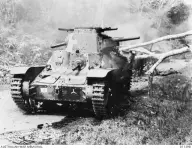
Slim River: Hold or Break?
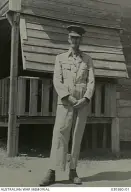
Ambon: Gull Force Driven to the Sea
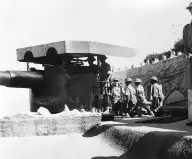
Hong Kong's Christmas — Maltby and the Surrender
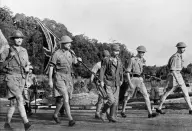
Percival and Yamashita's Ultimatum
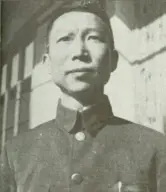
Changsha 1941: Xue Yue Faces the Japanese Offensive
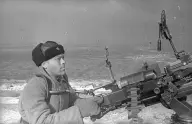
Crimea, February 1942: the Kerch bridgehead
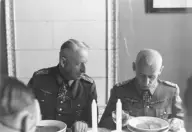
Crimea, December 1941: Manstein's dilemma
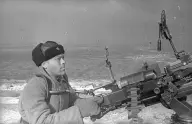
Crimea, December 1941: the Soviet amphibious gamble
The Demobilised Latvian Soldier and the German Offer
Snow Before Moscow — Zhukov and the Counter-Offensive
Slim River: Hold or Break?
Ambon: Gull Force Driven to the Sea
Hong Kong's Christmas — Maltby and the Surrender
Percival and Yamashita's Ultimatum
Changsha 1941: Xue Yue Faces the Japanese Offensive
Crimea, February 1942: the Kerch bridgehead
Crimea, December 1941: Manstein's dilemma
Crimea, December 1941: the Soviet amphibious gamble
The Demobilised Latvian Soldier and the German Offer
Snow Before Moscow — Zhukov and the Counter-Offensive
T10-074