
is an American general who has known China for years: he served there as a military attaché, speaks Mandarin and has travelled the country. In February 1942 he is named chief of staff to and commander of US forces in the China-Burma-India theater, tasked with rebuilding Chinese armies worn down by five years of war against Japan.
The situation is critical. After the attack on Pearl Harbor, Japan sweeps across Southeast Asia; its troops push into Burma and threaten the , the only overland route by which Allied aid still reaches China. If that artery falls, China will be isolated, supplied only by a fragile air bridge over the Himalayas. places two armies at Stilwell's disposal but intends to keep control over how they are used.
Stilwell must decide what course to take: commit the Chinese armies to an offensive to hold Burma and the overland route; withdraw these forces to India to preserve and rebuild them; or subordinate his plans to the political priorities of , anxious to spare his best divisions.
China, February 1942, the American general serving as Chiang Kai-shek's chief of staff: how should the Chinese armies be used to defend Burma?
threw the Chinese armies into the battle to defend Burma. The 1942 campaign turned into a disaster: despite some local successes, the Allied forces were broken by the Japanese, the was cut, and China was left dependent on the single air bridge over the Himalayas. Defeated, Stilwell refused evacuation by air and personally led a small group on foot through the jungle to India, declaring on arrival: "We got a hell of a beating." The episode permanently soured his relations with , whom he judged timid and corrupt and nicknamed "Peanut"; these tensions deepened until Roosevelt recalled him in October 1944.
Learn more about this event
Related polls
10
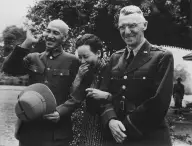
The Burma Road in Peril
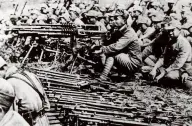
The New Fourth Army Incident
Arcadia — Germany or Japan First?
Before Moscow: stand fast or retreat?
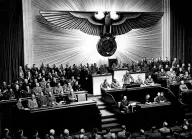
Berlin, December 1941 — the Reich faces the United States
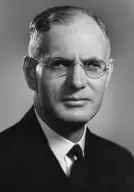
Curtin versus Churchill: the battle over the Pacific divisions
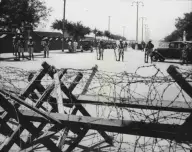
The Tientsin Incident
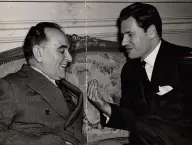
Vargas at Rio: Brazil Faces the Axis
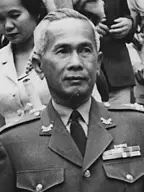
Bangkok Eyes the Lost Provinces of the Mekong
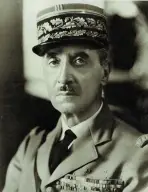
Catroux and Tokyo's pressure on Indochina
The Burma Road in Peril
The New Fourth Army Incident
Arcadia — Germany or Japan First?
Before Moscow: stand fast or retreat?
Berlin, December 1941 — the Reich faces the United States
Curtin versus Churchill: the battle over the Pacific divisions
The Tientsin Incident
Vargas at Rio: Brazil Faces the Axis
Bangkok Eyes the Lost Provinces of the Mekong
Catroux and Tokyo's pressure on Indochina
T10-081