
At the Warsaw Ghetto Wall, the Winter of Hunger
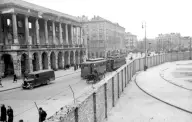
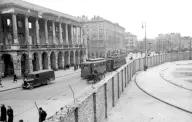
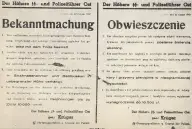
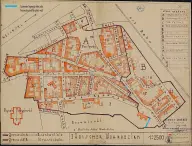
Barely thirteen, a smuggler of the knows every gap in the wall that seals off the district. Like hundreds of Jewish children and teenagers, he slips through the holes at the base of the wall, the sewers, and the bricked-up passages to reach the so-called Aryan side, where he trades what little of value remains for potatoes, flour, and bread. The official ration left to Jews is derisory; without smuggling, families do not eat.
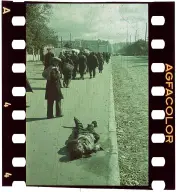
German sentries and the police know these crossings and shoot: many smugglers, among them the youngest, fall under the bullets at the foot of the wall. Inside the ghetto, hunger, typhus, and the cold kill every day; the poet has already captured in a poem the figure of the little smuggler who feeds his family at the risk of his life. The child knows he may not come back.
In this February of 1942, the first reports of the massacres in the east are reaching the ghetto, and the hunt is intensifying. The boy must decide his path: keep crossing the wall to feed his family despite the round-ups and the shootings; give up smuggling to stay alive, at the risk of watching his family starve; or put his knowledge of the passages at the service of the underground, carrying documents and messages rather than food.
Warsaw Ghetto, February 1942, a teenage smuggler: should he keep crossing the wall despite the executions?
Most smugglers kept going: smuggling, carried out in large part by children and teenagers, remained vital, supplying most of the calories that kept part of the ghetto alive, where around 450,000 Jews were sealed into a few streets. Hunger there was organised by the occupier: the official rations left to Jews fell to around 180 to 220 calories a day, condemning people to a slow death. Hundreds of smugglers, many of them very young, were shot at the foot of the wall or in the passages; others died of hunger, cold, or typhus. Between 1940 and mid-1942, more than 80,000 people died of starvation and disease in the ghetto, before the summer 1942 deportations to . , who immortalised the little smuggler, was herself deported and murdered at in 1942.
Learn more about this event
Related polls
10
Barred from School in the Warsaw Ghetto
Feeding Her Children in the Paris Winter of 1942
Warsaw Ghetto Teachers and the Ban
Le Chambon-sur-Lignon: Hide Them or Hand Them Over?
The Village and the Men of the Woods
The Circular That Divided Norway's Schools
A Polish Priest and the Gestapo
Occupied Kyiv: A Knock at the Door
The apothecary of the Kraków Ghetto
The Jewish Schoolteacher of Kazimierz
Barred from School in the Warsaw Ghetto
Feeding Her Children in the Paris Winter of 1942
Warsaw Ghetto Teachers and the Ban
Le Chambon-sur-Lignon: Hide Them or Hand Them Over?
The Village and the Men of the Woods
The Circular That Divided Norway's Schools
A Polish Priest and the Gestapo
Occupied Kyiv: A Knock at the Door
The apothecary of the Kraków Ghetto
The Jewish Schoolteacher of Kazimierz
T10-069