
Volkhov Front: The Thrust Toward Lyuban
has commanded the since its creation in December 1941, tasked with breaking the siege of Leningrad from the southeast. A officer who served in the Finnish war, arrested then released during the purges, he knows Moscow expects quick results and that the Stavka watches every kilometre gained on the map.
Since 7 January his troops have crossed the frozen Volkhov. The has torn a breach in the German lines and is pushing northwest toward Lyuban, through a zone of forests and marshes where roads are scarce and the channels too thin to bring up relief and supplies. The gap through which the army poured remains narrow: a long corridor held by the enemy on either side, which German counterattacks constantly threaten to close.
Meretskov must decide how to employ this army already deep inside the enemy's positions: press the farther toward Lyuban to break through to Leningrad before the thaw; halt the advance and first widen the base of the corridor, at the risk of losing momentum and letting the enemy recover; or suspend the offensive and pull the army back behind the Volkhov to preserve it.
Volkhov Front, February 1942, Kirill Meretskov: how should the 2nd Shock Army committed toward Lyuban be employed?
The offensive was pressed on, and the drove ever deeper into the marshy pocket toward Lyuban, never reaching the town nor linking up with the forces coming from the north. In mid-March 1942 a German counterattack closed the neck of the corridor and cut the army off from its rear; reopened intermittently at enormous cost, it was sealed for good by late spring. Encircled, deprived of food and ammunition in the mud of the thaw, the was destroyed: tens of thousands killed and captured. , sent to take command of it, was captured in July 1942 and went on to serve the Germans. Meretskov kept his command and would renew the offensive on this front in later years.
Learn more about this event
Related polls
10
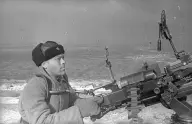
Crimea, December 1941: the Soviet amphibious gamble
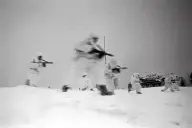
Konev and the Rzhev Salient
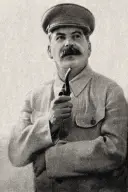
How far to press the advantage?
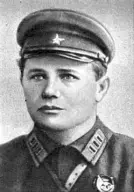
Toropets: How Far to Push the Breakthrough in the Snow?
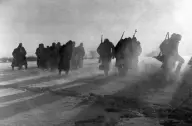
Snow Before Moscow — Zhukov and the Counter-Offensive
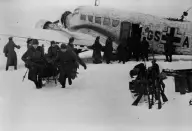
Demyansk: hold the pocket or break out?
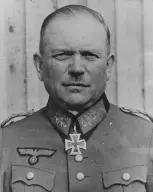
Guderian before Tula, October 1941
The Mud, the Winter and the Road to Moscow
Perekop: the Iron Gate of Crimea
Rommel's Forbidden Gamble in Cyrenaica
Crimea, December 1941: the Soviet amphibious gamble
Konev and the Rzhev Salient
How far to press the advantage?
Toropets: How Far to Push the Breakthrough in the Snow?
Snow Before Moscow — Zhukov and the Counter-Offensive
Demyansk: hold the pocket or break out?
Guderian before Tula, October 1941
The Mud, the Winter and the Road to Moscow
Perekop: the Iron Gate of Crimea
Rommel's Forbidden Gamble in Cyrenaica
T10-084